What Is Workbench Tax In Rust
Learn what the workbench tax is in Rust, why it exists, and how to work around it.
Workbench tax has become one of the more debated additions to Rust’s progression loop in recent years. Rather than sitting on the research table, where players consume a found item and pay a scrap fee, the tax lives inside the workbench tech tree, the interface where scrap alone unlocks a crafting recipe without needing to find the item first. Get the distinction wrong and the whole system stops making sense, so it is worth clearing up before anything else: workbench tax applies when you spend scrap directly on the tech tree at a workbench. It does not change what you pay at a research table.
What Workbench Tax Actually Does
Every item on the tech tree has a base scrap cost. When you open a workbench and start unlocking recipes with scrap instead of learning them from a physical item, the game adds a percentage on top of that base cost, and the percentage scales with the tier of workbench you’re standing at. The default rates are simple: tier 1 workbenches add zero tax, tier 2 adds ten percent, and tier 3 adds twenty percent. So an item that costs 500 scrap on the tech tree stays at 500 scrap if researched through a tier 1 bench, rises to 550 at tier 2, and reaches 600 at tier 3.
This is the part players often misunderstand. The research table, the deployable that lets you place a found item and burn scrap to learn its blueprint, is untouched by this tax entirely. If you find an AK-47 in a crate and research it the old fashioned way, you pay whatever the research table lists, full stop. The tax only bites when you’re paying scrap for a recipe you haven’t physically found, straight from the tech tree screen. The developers built it this way on purpose: the tax is a toll on convenience, not on discovery. Facepunch’s own patch notes for the system describe it as exclusive to the workbench, with research table costs left unchanged, and the tax amount is shown right on the purchase button before you commit any scrap, so there’s no guessing involved.
The effect on play is still real, even with that narrower scope. Groups that skip looting and simply buy their way up the tech tree at a tier 3 bench end up paying a fifth more scrap than a player who finds items in the wild and researches them the traditional way. That gap adds up fast across a full tech tree, and it nudges players toward monument runs and looting rather than treating scrap as a straight currency for skipping content.
Workbench Tiers and What They Unlock
Tier 1 Workbench
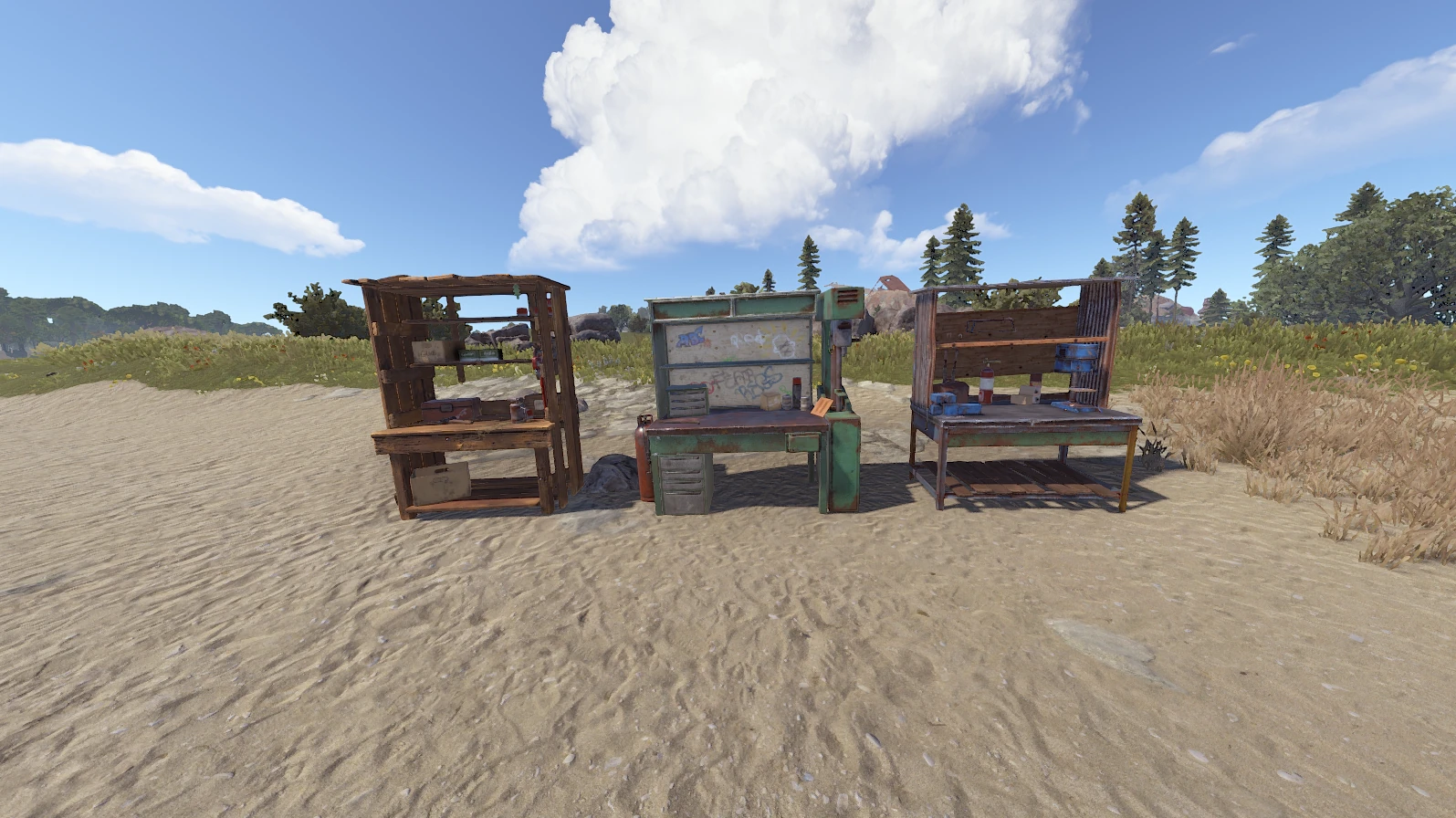
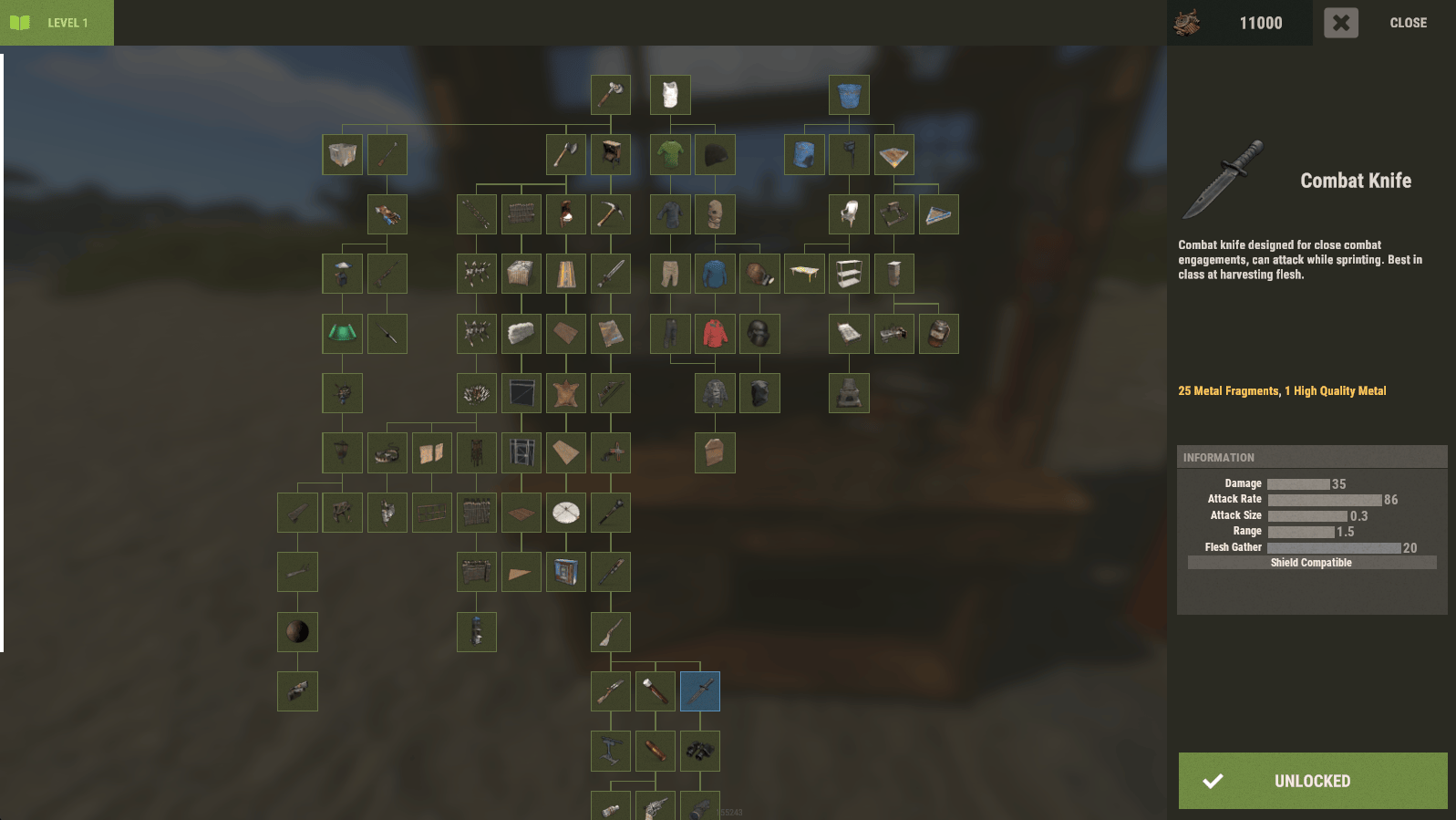
The cheapest and earliest bench in the game, crafted for 500 wood, 100 metal fragments, and 50 scrap. It takes about a minute to build once you have the resources. Tier 1 opens up early melee tools, the revolver and other starter firearms, light clothing, wood and stone building pieces, and a scattering of basic electrical components. Because tier 1 tax sits at zero percent, this bench is the cheapest place in the game to buy anything off the tech tree, and most solo players and small groups spend their first hours parked here before pushing further.
Tier 2 Workbench
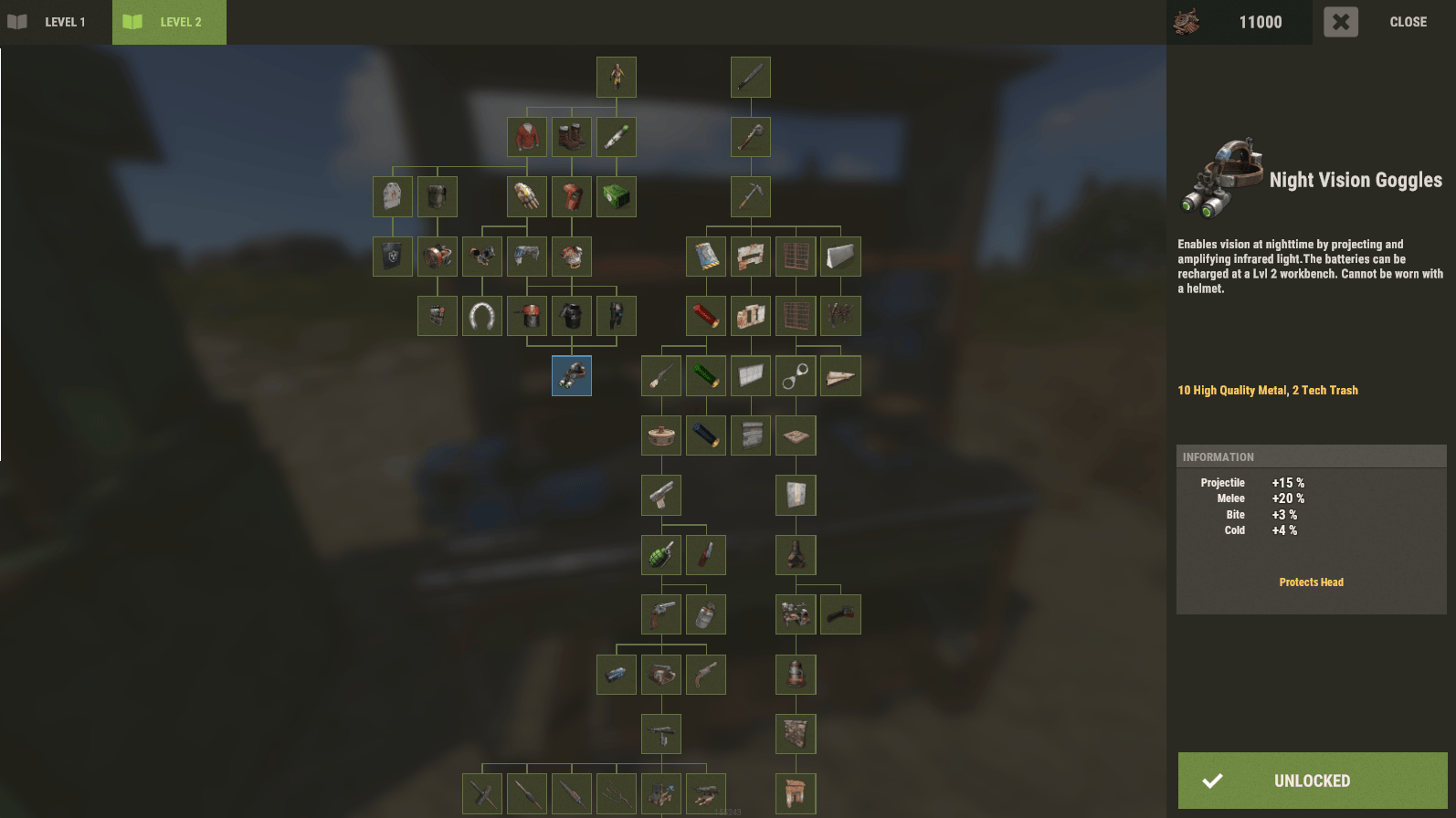
This is where the game genuinely opens up. Upgrading to tier 2 costs metal fragments and high quality metal along with additional scrap, and it unlocks mid tier weapons like the semi automatic rifle and the Python revolver, roadsign armor, garage doors, auto turrets, and a wider spread of electrical parts. It’s often called the sweet spot of progression, since a semi automatic rifle paired with roadsign armor competes with much of what tier 3 offers, without the raid risk that comes from stockpiling top tier gear early. The ten percent tax means a two hundred scrap item costs an extra twenty scrap when bought straight off the tech tree at this tier, which is noticeable but rarely prohibitive for a group splitting the cost.
Tier 3 Workbench
The most expensive bench to build and the gateway to everything endgame: the AK-47, LR-300, M249, rocket launcher, C4, industrial electrical components, and armored building pieces. Facepunch has adjusted the exact crafting cost of tier 3 more than once, generally trending the requirement downward over successive updates, and recent changes have shifted part of the cost away from pure scrap toward collectible blueprint fragments found in monument puzzle rooms and high tier crates. Whatever the current exact numbers, the twenty percent tax remains the headline concern. An AK-47 that costs 500 scrap on the tech tree runs 600 scrap if bought directly at a tier 3 bench, and a rocket launcher’s tax premium alone can run into the hundreds of scrap. That premium is exactly why looting still matters even once a group has a maxed out bench: finding the item and researching it at the table sidesteps the tax completely.
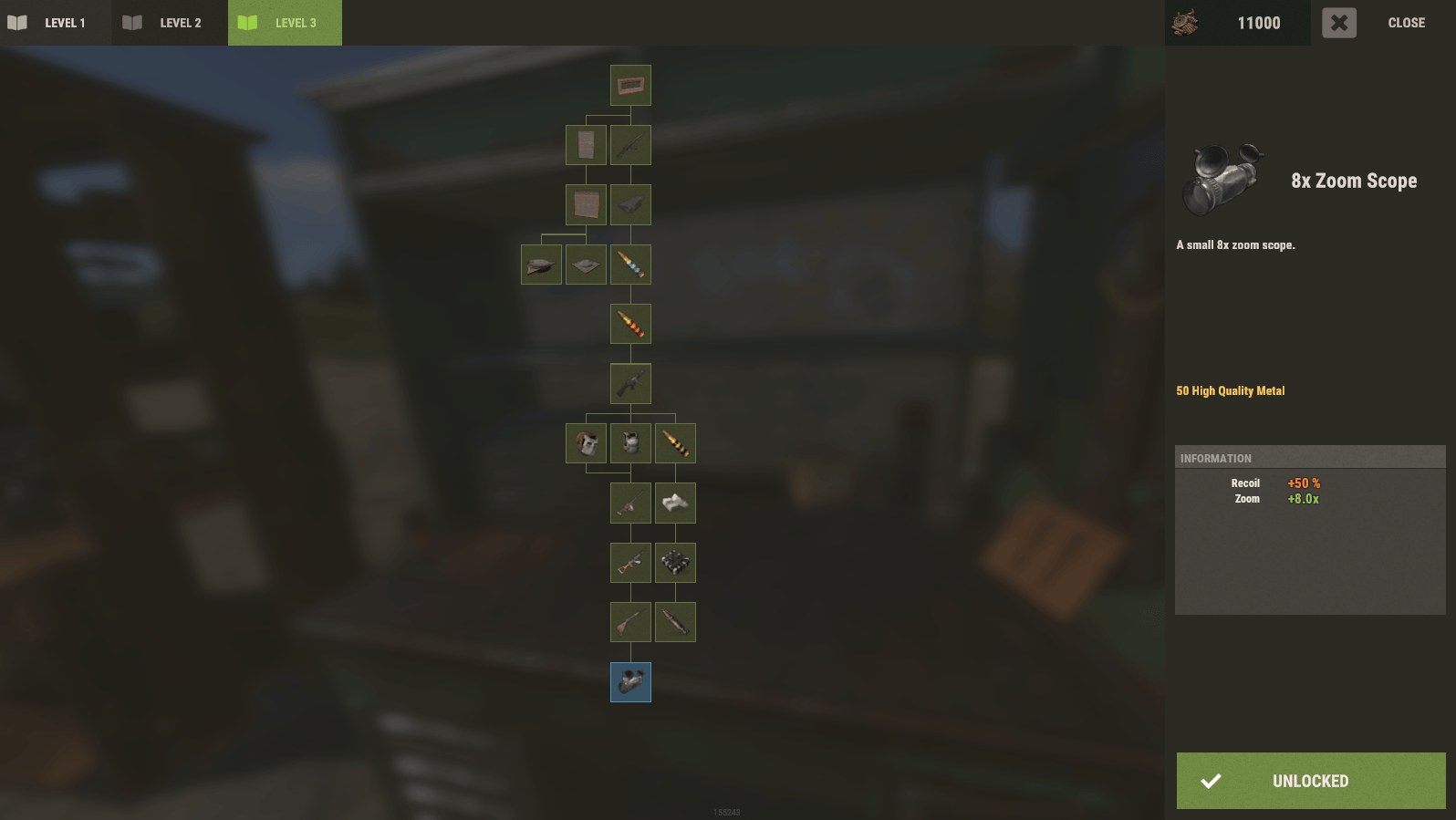
Research Table vs. Tech Tree
It helps to think of these as two separate systems that happen to unlock the same content. The research table has been part of Rust for years. You place a found item in the slot, the game tells you the scrap cost, you pay it, and the item is destroyed in exchange for a permanent blueprint. This process takes about ten seconds and is unaffected by workbench tier or the tax system.
The tech tree, opened from inside a workbench, is a newer convenience layer that lets you buy blueprints outright with scrap, without ever finding the item. It organizes unlocks into branches covering melee weapons, firearms, tools, building materials, and electrical components, and each node lists its required workbench tier and its scrap cost before tax. Blueprints must generally be unlocked in order along a branch, so you can’t skip straight to an AK-47 without passing through the cheaper items ahead of it on that branch.
Because the tech tree offers guaranteed access regardless of luck, many players and groups use it as a backstop: loot what you can find at monuments, since that avoids the tax, and fall back on the tech tree with its markup for whatever items refuse to drop. Teams sometimes split this work deliberately, assigning one player to loot specific monument types for items on their wishlist while a second player mops up cheaper branches directly at the bench.
Where Scrap Comes From
Scrap acquisition breaks down into a handful of familiar activities, each with a different time investment. Recycling components you’ve gathered, whether from barrels, crates, or looted gear, is the most reliable source and can be done safely at outposts that don’t allow PvP. Different components yield different scrap amounts, and higher value components like tech trash or weapon bodies generally return more scrap per item than raw resources.
Monument runs are riskier but usually more lucrative per hour, since crates, scientist drops, and locked crate rooms all feed scrap and researchable items simultaneously. Higher tier monuments like launch site, oil rig, and the military tunnels tend to reward players with better weapons and components, though they also draw more contested fights.
Bandit camp offers a straightforward vendor exchange, letting players convert surplus resources like wood, stone, sulfur, and cloth into scrap at fixed rates. It’s a slow trickle compared to recycling or looting but useful for turning excess base materials into something you can actually spend on the tech tree. The gambling wheel at bandit camp technically offers scrap too, but the odds are stacked against the player, and treating it as a real source of income is a losing strategy over time.
Trading with other players, whether through vending machines or direct deals, often beats vendor prices for anything in demand, particularly tech trash, ammunition components, or spare weapons. A well stocked vending machine near a busy road can quietly fund an entire base’s research budget over the course of a wipe.
Budgeting Scrap Across a Wipe
Workbench tax changes how experienced players plan their scrap spending. Early on, while sitting at a tier 1 bench with no tax penalty, it makes sense to buy whatever cheap utility items you can off the tech tree directly, since there’s no markup to avoid. A code lock, a sheet metal door, basic tools, these are all reasonable tech tree purchases in the first day or two.
Once a group moves to tier 2, the calculation shifts. The ten percent tax is small enough that most groups still buy convenience items straight off the tree, but higher value unlocks like the semi automatic rifle or Python revolver are worth researching from a found item at the table if one turns up during looting, simply because the savings scale with the item’s base cost.
At tier 3, the math gets serious. A twenty percent markup on a rocket launcher or a stack of C4 blueprints is enough scrap to fund a second base’s worth of tier 1 unlocks. Groups that plan to run multiple raids in a wipe tend to prioritize looting launch site, the oil rigs, and locked crate rooms specifically to avoid paying that markup on their most expensive purchases, saving the tech tree purchases for items they simply can’t find in time.
There’s also a break even consideration around the bench itself. If a group expects to unlock more than a handful of items at a given tier, building and holding onto that tier’s bench usually saves more scrap in avoided tax than it costs to craft, assuming the bench survives. That “assuming it survives” clause matters more than it sounds. Workbenches are raidable structures, and losing a fully built tier 3 bench to a raid means paying its full crafting cost again on top of whatever scrap was already spent teching up, so serious groups tend to build a spare bench of each tier and keep it behind a separate locked room from the main one.
Playing Around the Tax by Group Size
Solo players generally benefit from minimizing tech tree purchases altogether. Since a solo player has less scrap income per hour than a group, every percentage point of tax matters more. The efficient path favors researching found items at the table whenever possible, treating the tech tree as a last resort for items that simply won’t drop, and skipping expensive tier 3 luxuries like industrial electrical setups unless the base specifically needs them.
Duos can split research responsibilities to cover more ground. One player focuses on combat viability, rushing a tier 2 bench for weapons and armor, while the other handles utility unlocks like electrical basics and storage upgrades. Coordinating who researches what avoids wasted scrap on duplicate unlocks, and duos often reach a shared tier 3 bench several days into a wipe once their scrap income stabilizes.
Larger groups absorb the tax more comfortably because their scrap income scales with headcount. A four or five player group can often afford to rush a tier 2 bench within the first hour and a tier 3 bench by day two, buying directly off the tech tree for convenience even at the twenty percent markup, since the alternative, waiting on RNG loot drops for every item, costs more in lost time than it saves in scrap. Designating a single player as the group’s dedicated researcher, funded by everyone else’s scrap contributions, tends to work better than letting research happen ad hoc.
How the System Has Evolved
Facepunch has iterated on workbench costs and progression gates repeatedly since the tech tree was introduced, and the trend has generally been toward adding more structure rather than less. One notable shift moved part of the tier 2 and tier 3 workbench crafting cost away from raw scrap and toward collectible blueprint fragments, found through monument puzzles, hackable crates, and elite loot. The stated goal was to keep large groups from simply out farming their way to a maxed bench on day one, while giving solo and small group players a path that rewards pushing into contested monuments rather than grinding scrap alone.
These fragment requirements sit alongside the tax system rather than replacing it. You still need the fragments (or their reduced scrap cost equivalent) to build the bench itself, and once it’s built, the same tiered tax percentages apply to whatever you unlock from its tech tree. The two systems work together to slow down progression at multiple points instead of just one.
Item placement across tiers has also shifted over time, with certain weapons and ammo types moving between tiers as Facepunch rebalances the game’s pacing. Anyone planning a research route for a competitive server should check current patch notes rather than assume last wipe’s tier assignments still hold, since these changes happen often enough that outdated guides can send players down the wrong branch entirely.
Server Settings and Custom Configurations
Server owners who want to adjust the tax system have direct access to the relevant settings through console variables, typically set in server.cfg or adjusted live through RCON. The tax rate for each tier is controlled independently through settings named for each workbench level, and each accepts a value between zero and one hundred percent, giving admins full range from no tax at all to a punishing surcharge on every tech tree purchase. Whatever value is set, it displays directly on the purchase button in game, so players on a modified server always know what they’re paying before committing scrap.
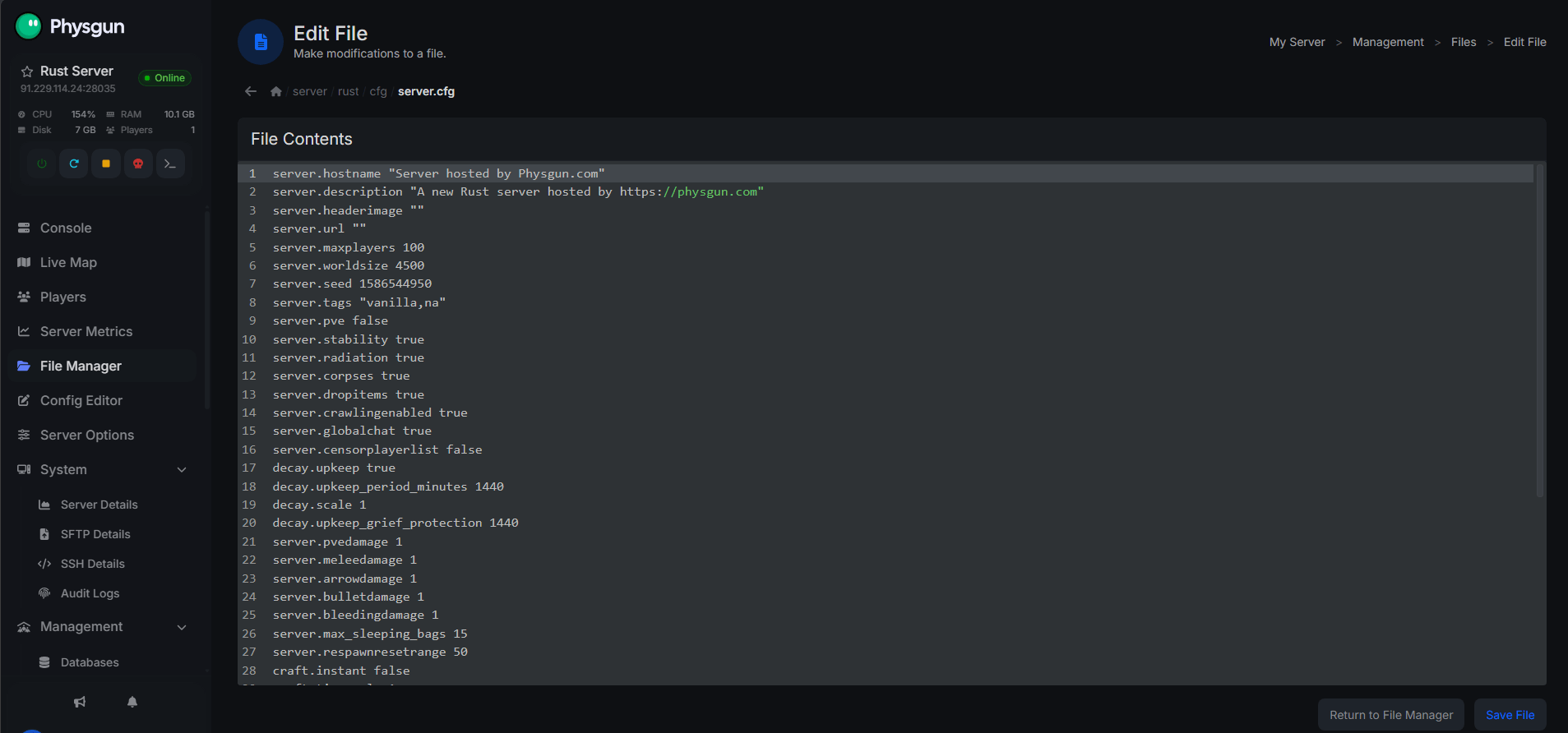
Most hosting panels that offer a graphical interface for Rust servers expose these settings somewhere in their crafting or research configuration section, sparing admins from editing the config file directly, though the exact location varies by hosting provider. For servers running Oxide or Carbon plugins, several community made plugins extend the base system further, allowing per player or per permission group tax adjustments, which some communities use to offer VIP discounts or special event modifiers.
The practical effect of tuning these numbers is significant. A server running zero tax across all three tiers sees progression accelerate sharply, with groups reaching endgame gear within the first couple of days and player counts often dropping off once the early excitement fades. Servers that push the tax rates higher than default, particularly at tier 3, tend to stretch out the early and mid game, which some communities like because it keeps monument fights relevant longer, though it can frustrate casual players who don’t have the hours to grind through a steeper curve. A moderate approach, something like leaving tier 1 untouched, nudging tier 2 slightly above default, and pushing tier 3 up meaningfully, tends to preserve the vanilla feel while still discouraging players from treating the tech tree as a shortcut around actual looting.
Whether left at default or tuned by a server admin, the tax system remains one of the more direct levers Facepunch has given the community for shaping how a wipe unfolds, and understanding exactly where it applies, and where it doesn’t, is the difference between spending scrap wisely and burning through it faster than necessary.
Was this article helpful?
Thanks for the feedback!