
Getting your Rust server on the community list is easier than most admins think, and the process is user friendly. Most server providers like Physgun offer straightforward interfaces and guides. Yet one small misstep can keep it hidden. If your Rust server is not showing up in the server list, the issue usually comes down to configuration, visibility settings, or outdated server files. The good news? It is almost always fixable in a few minutes.
Community servers in Rust offer a unique gaming experience with customized settings, rules, and communities.
This guide will walk you through how to:
-
Configuring your server correctly (name, ports, etc.)
-
Updating server files via SteamCMD so it’s up to date
-
Ensuring no modded flag/plugins break community list rules
-
Restarting and refreshing Steam’s cache and listings
Once we’re finished, your server will be visible to players in the Community List.
What Is The Community List In Rust?
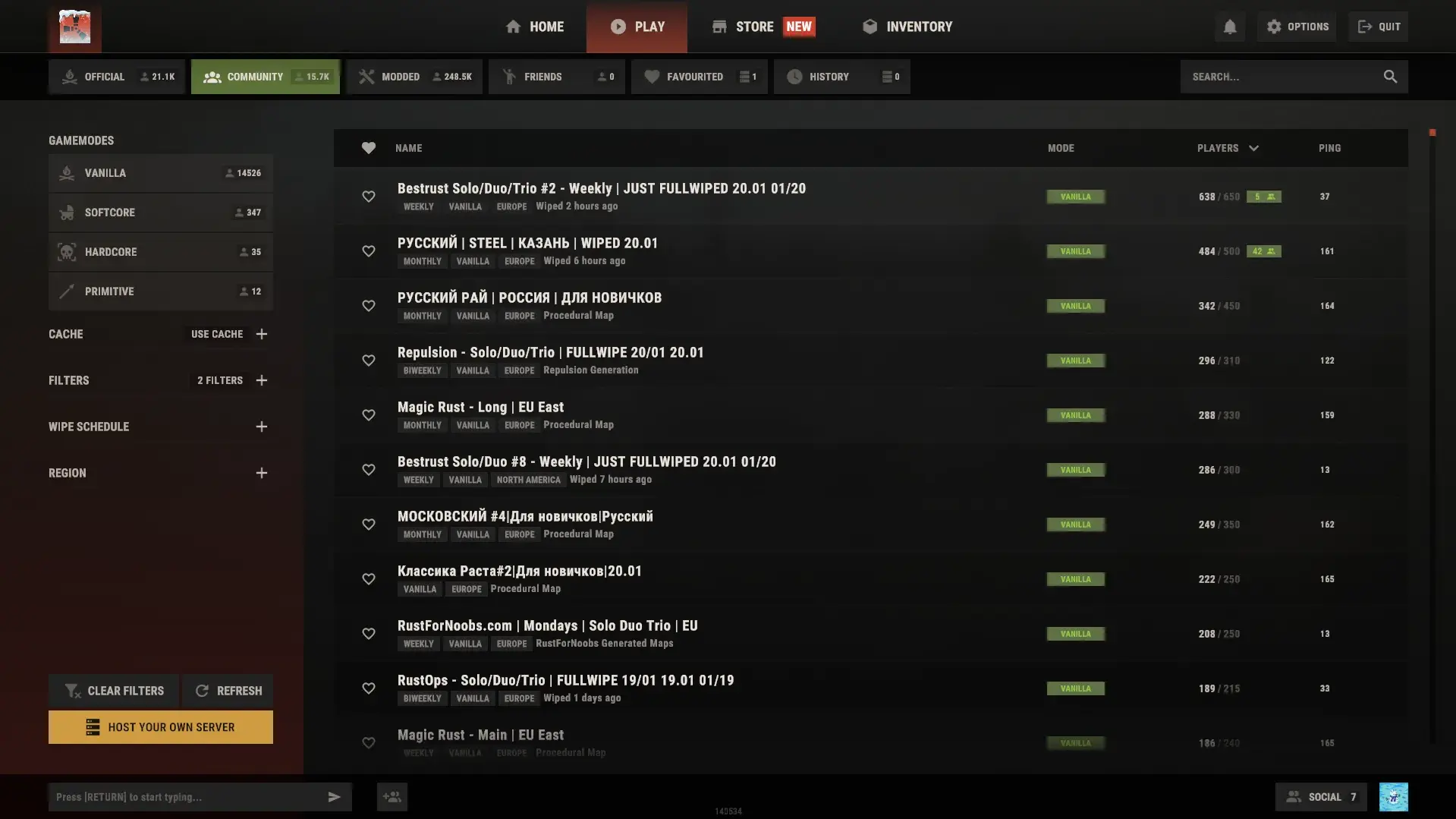
Rust’s Community Server List is the in-game directory of vanilla or community-hosted servers that follow Facepunch’s guidelines. By default, any Rust server can appear in the Community list if it meets the rules: no gameplay-altering mods, only approved admin tools, and proper configuration.
Community servers are essentially “vanilla” servers with optional admin plugins. Servers that break these rules (for example, by using visual or gameplay mods) are moved to the Modded List or risk being removed entirely. In short, the Community list is the filter that shows authentic or admin-modded Rust servers, while ensuring purely commercial or heavily modded servers do not appear.
Community servers provide a dedicated space where players can tailor the gameplay experience to their preferences, such as adjusting day/night cycles and resource spawn rates.
Getting Your Rust Server On The Community List
To make your server visible under Community (not Modded), follow these steps:
-
Configure your server files correctly (name, ports, etc.)
-
Update to the latest Rust build using SteamCMD
-
Disable the “Modded” flag and use only allowed plugins (Note: You must install Oxide before adding plugins)
-
Restart the server and clear Steam cache to refresh the list
You must also follow Facepunch Studios’ community guidelines to qualify as a Community Server.
If done right, your server will appear in the Community list for players to find.
Verify server IP/Port and Name:
Ensure your server’s startup command (or control panel settings) includes the correct IP and port (+server.ip yourIP +server.port yourPort). The default ports for Rust are 28015 (game port) and 28016 (query port). For servers created after February 2023, a dedicated IP address is usually required for listing. An incorrect or missing IP/port can prevent Steam from listing your server. Also check the server name and description in your server.cfg or control panel – a very long name might not show properly. Shortening the server name can help improve its visibility in the list. Keep the name concise and free of special characters. Once updated, save your config files and restart.

Update Server Files:
Your Rust installation must be fully up to date. Use SteamCMD to update: run a command like +login anonymous +app_update 258550 validate +quit in a script, or use your host’s update feature. Wait for the update to finish; the console should show a “Success” message. Also update Oxide/uMod if used. Outdated versions of Rust, Oxide, or plugins will prevent your server from being publicly listed or displayed in the community list. Make sure your server’s encryption is set to 2, as this is required for public listing. Keep in mind that Rust can only display a maximum of 5000 servers at a time, so your server may not always be displayed if the list is full. Outdated server files or Oxide versions can cause listing issues. After updating, restart the server. A fresh start ensures all changes apply and that Steam’s query ports (default 28015) are open and responding.
Disable “Modded” Flag and Check Plugins:
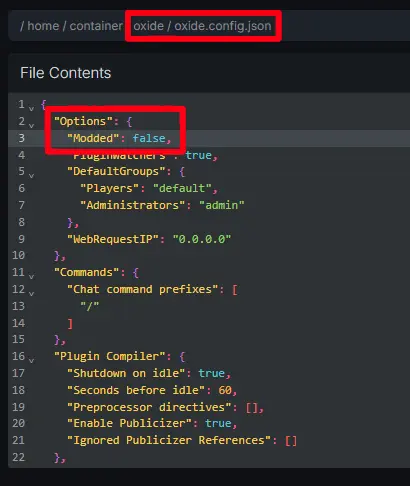
Open your Oxide configuration file (oxide/config.json) and set “Modded”: false. This tells Rust and Steam that your server runs no disallowed mods, which is required for Community listing. Then review your plugins: only use admin tools (vanish, GUI, spam filters, etc.) that do not change gameplay or visuals. Facepunch allows “admin tools” only, nothing for players and nothing that visually or mechanically alters the game. Any plugin that affects gameplay (even minimally) can push you onto the Modded list or get you blacklisted. After disabling Modded and pruning plugins, delete any disallowed plugins or files that could affect your server’s eligibility for the Community list. Make sure you comply with the terms of service of both your server provider and Rust. Save and restart the server again.
Restart and Refresh Steam:
Finally, give it a moment and check the Rust UI. If your server still doesn’t show, clear Steam’s cache to force a refresh: in Steam go to Steam, Settings, Downloads, Clear Download Cache. Log back into Steam and open Rust; your server should appear under Community Servers. If not, wait a few minutes (propagation can take time). Servers with zero players are hidden by default, so enable the “Show Empty” filter to find them. It can take up to 30 minutes for a new server to appear on the master list after a restart. To confirm your server is online, click to add it to your Steam Favorites list using its IP address as a link. Double-check your settings above. Sometimes moving the server’s region closer to you or your players can improve visibility.
Final Tips
-
Steam Game Server Token: If you want your server to list publicly at the top, use a valid Steam Game Server Login Token (GSLT) tied to Rust (AppID 258550). Without it, your server may still be joinable by IP but appear at the bottom of lists.
-
Firewall/Port Forwarding: Ensure UDP port 28015 (and query port 28016) is forwarded if hosting at home. If Steam can’t reach your server, it won’t show up.
-
Server Location: Hosting in a region close to your target players can lower ping and make your server easier to find for them. Moving your server to a location closer to your target audience (servers closer) can further improve ping and increase your server’s visibility in the community list.
-
Server Menu: Use the server menu provided by your hosting platform to manage, customize, and troubleshoot your Rust server settings.
Following these steps will get your server properly configured. Your Rust server should then be automatically added to the Community Servers list, allowing players to discover and join it like any official vanilla server.