
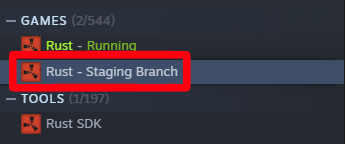
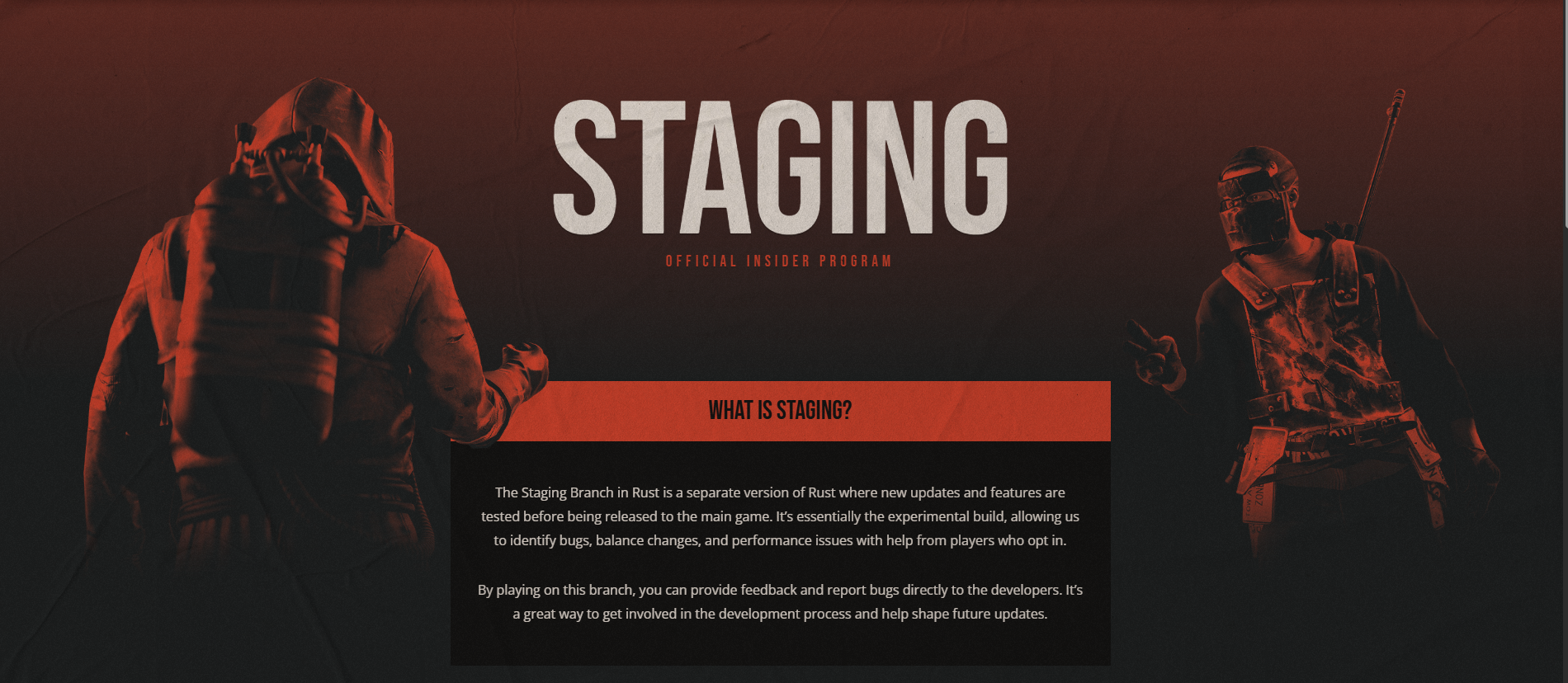
The Rust Staging Branch is a separate version of Rust available in your Steam library. It acts as a test build where developers push experimental updates before they reach the main version or release version on live servers. Instead of the stable experience found in the base Rust game, Rust Staging focuses on testing new features, game mechanics, and upcoming content.
Here’s what that means:
The staging branch gives early access to future updates and new items
It runs on staging servers, not standard live servers
Rust developers and the Facepunch team use it to identify bugs, fix stability issues, and test performance
Players can install it through the Steam client and connect to a Rust staging server
Rust server hosting providers can host a staging version just like the main game
Essentially, Rust Staging is the public testing ground before new content is officially released.
Rust Staging Branch vs. Rust: What’s The Difference?

Rust (Main Game)
The main version of Rust is the stable experience most players use. It runs on live servers and contains:
Fully tested game elements
Balanced building mechanics and combat systems
Fewer bugs and performance issues
Monthly official updates instead of constant patches
This is the version you play if you want normal progression, wipes, and consistent gameplay with friends and the wider Rust communities.
Rust Staging Branch
The Rust staging branch is a test version of the game used for development and feedback. It includes:
Experimental updates and unfinished features
Frequent patches, sometimes multiple times per week
Bugs, crashes, and possible instability
Server wipes without warning
It’s designed for testing, not long-term progression.
Do You Need Rust Staging Branch To Play Rust?
No. You do not need the staging branch to play Rust.
You only need the base Rust game to:
Join live servers
Play official wipes
Access the normal release version
The staging branch is optional and mainly for:
Testing upcoming features
Hosting a staging server
Providing feedback to developers
Benefits Of Rust Staging Branch
Using Rust Staging gives players:
Early access to upcoming features and new content, giving players early access to test and experience upcoming content before official release
A sneak peek at future game mechanics and items
The ability to test changes before they are officially released
A way to help identify bugs and provide feedback; players on the Staging Branch can report bugs directly to developers, influencing the final version of the game
Staging allows the team to fine-tune new items based on real player data
It’s also useful for server owners who want to prepare plugins, maps, and systems for future updates. The Staging Branch is an important part of rust's development, enabling ongoing updates and community influence.
Drawbacks Of Rust Staging Branch
Because it’s a test build, the staging version comes with downsides:
Frequent updates and downloads
Server wipes with little warning
Performance issues and crashes
Unfinished or broken features
Players may experience crashes and performance issues while using the Rust Staging Branch due to its experimental nature.
Progress on staging servers is not meant to be permanent, so it can be frustrating if you’re trying to play normally. However, if you enjoy testing new features and don’t mind minor bugs or glitches, that’s fine. These imperfections are expected during the experimental phase.
Features of the Rust Staging Branch
The Rust Staging Branch stands out as a constantly evolving environment where players and developers come together to shape the future of Rust. As a separate version available in your Steam library, the staging branch gives players early access to new features, experimental game mechanics, and upcoming content long before these changes make their way into the main game or release version.
One of the biggest draws of the Rust Staging Branch is the opportunity to experience and test new building mechanics, items, and systems as soon as they’re introduced by the Facepunch team. This early access lets players get a sneak peek at what’s coming next, experiment with new content, and even discover innovative ways to play Rust before these features are officially released.
The staging branch also serves as a vital testing ground for Rust developers. Here, experimental updates and bug fixes are rolled out frequently, allowing the community to help identify bugs, report performance issues, and provide feedback directly to the development team. This collaborative approach ensures that new features are refined and stable by the time they reach the main game.
For those interested in Rust server hosting, the staging branch offers flexibility. Players can join public staging servers or create their own server to test the latest updates, try out new content, and prepare for future changes. This is especially valuable for server owners and modders who want to ensure compatibility and stability ahead of official releases.
While the staging server environment is exciting, it does come with its share of challenges. Because it’s focused on testing, players may encounter bugs, crashes, and stability issues more frequently than on standard live servers. However, this is all part of the process, as the staging branch is designed to push the boundaries and identify problems before they impact the wider player base.
Another unique feature of the Rust Staging Branch is the ability to spawn new items and test vehicles with the right permissions. This gives players a hands-on way to explore the latest game elements and provide valuable feedback to the developers, helping to shape the direction of future updates.
In summary, the Rust Staging Branch is an essential part of Rust’s development cycle. It offers players and server hosts a front-row seat to upcoming features, new content, and experimental mechanics, all while playing an active role in improving the game. Whether you’re eager to test the latest updates, provide feedback, or simply want a sneak peek at what’s next, the staging branch is the place to be for anyone passionate about Rust’s future.
How To Install Rust Staging Branch
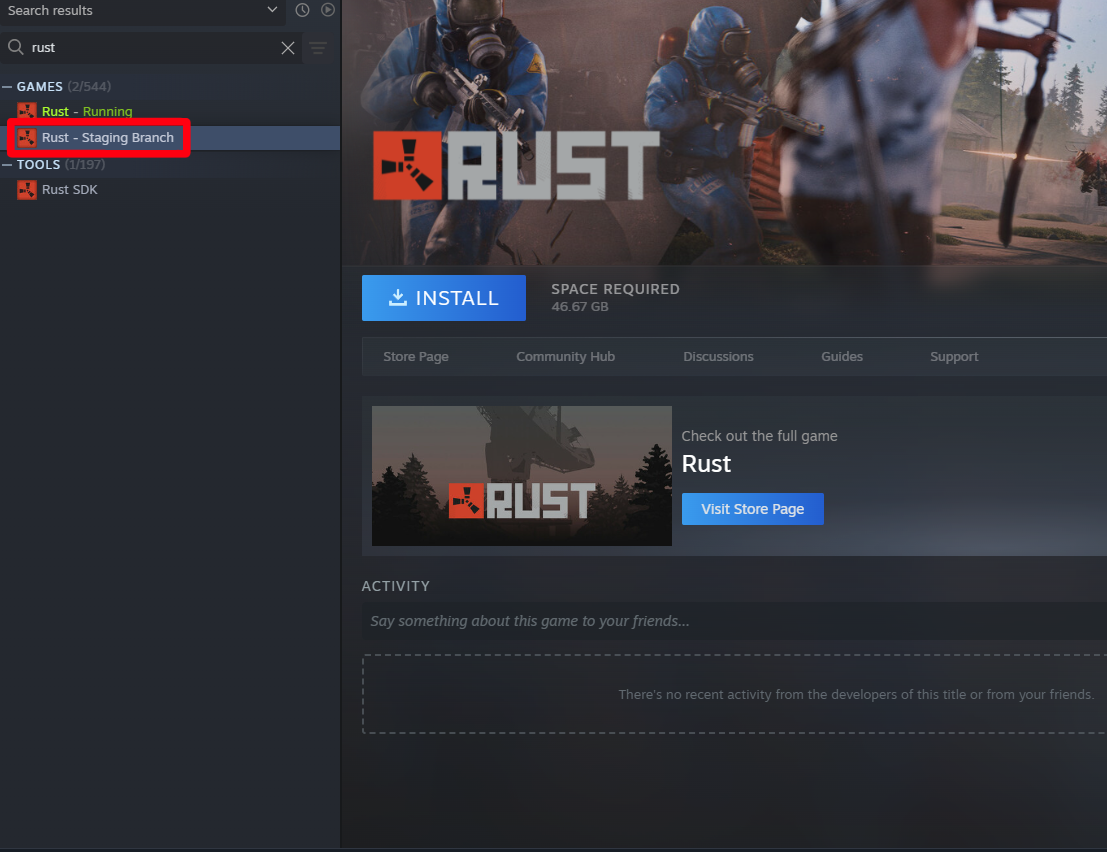
To install the Rust staging branch:
Open your Steam client
Go to your Steam library
Search for Rust – Staging Branch
Click install and download the separate version
Launch it and connect to a staging server
Once you complete the installation, it will appear as a different game in your game library, so it won’t affect your main Rust install.
How To Copy Rust Settings To Staging Branch
To copy your settings from the main game:
Open your Rust install folder
Locate your configuration files
Copy them into the Rust Staging folder
Launch staging and verify your controls, graphics, and keybinds
This saves time so you don’t have to reconfigure everything.
How To Make A Rust Staging Branch Server
To create a Rust Staging Branch server, you can run it directly on your own system (your personal computer or hardware) or use a hosting provider for more flexibility and control:
Download the staging server files using SteamCMD
Install them in a separate server directory
Configure your server.cfg like a normal Rust server
Set ports and performance parameters
Launch the staging server build
Connect using the staging branch client
To host a Rust Staging Branch server, you need to sign up for an account on a server hosting platform like Physgun.
Physgun supports the staging version, so you can also deploy one with a single click.
Who Should Use Rust Staging?
Rust Staging is best for:
Server owners preparing for new updates
Mod developers testing compatibility
Players who want early access to upcoming features
Anyone interested in Rust’s development process
If you just want to play, progress, and avoid bugs, stick to the main game.
Conclusion
The Rust Staging Branch is a separate test version of Rust that gives players early access to future updates, new items, and experimental mechanics before they reach the main game. It runs on staging servers, receives frequent patches, and is used by the Facepunch team to identify bugs and improve stability.
While it offers a sneak peek at upcoming content and a way to provide feedback, it also comes with frequent wipes, performance issues, and unfinished features. You don’t need it to play Rust, but it’s an essential tool for developers, server hosts, and players who want to stay ahead of new updates.
If you want a stable experience, play the main version. If you want to test the future of Rust, the staging branch is where it happens.