
Rust has always been a brutal survival game, but for many veteran players, the standard experience eventually becomes predictable. You learn the map, rely on UI elements, communicate instantly through global chat, and move through progression with a level of comfort that removes some of the tension. For many players, the introduction of the new game mode has created a more challenging experience that pushes survival skills to the limit.
Rust Hardcore Mode changes that completely.
This game mode strips away many of the conveniences found in the base game and forces players to rely on awareness, communication, and raw survival instincts. It’s not just harder—it’s more immersive, slower, and far less forgiving.
If you’ve ever wanted Rust to feel more intense, unpredictable, and survival-focused again, hardcore mode is exactly that.
In this article, we present the comprehensive features, mechanics, and strategies of Rust Hardcore Mode to help you understand and excel in this challenging experience.
What Is Rust Hardcore Mode?
The rust hardcore game mode is an official game mode designed to create a more realistic and punishing survival experience. It removes or limits several core systems that players normally depend on, such as map visibility, compass UI, team indicators, and global communication. Hardcore mode removes modern features like the map, compass, global chat, and team systems.
Instead of relying on UI and systems, players must:
Navigate the world manually
Communicate through proximity or voice
Track teammates without visual indicators
Survive without constant information
Navigation relies on landmarks or a rare handheld map, as the in-game map is disabled and the compass UI is not present in this mode. Friends cannot be easily identified due to the removal of the team system UI.
The result is a version of Rust that feels closer to a true survival sandbox rather than a guided multiplayer experience.
Why Hardcore Mode Exists
Over time, Rust evolved to become more accessible. Features like global chat, team UI, safe zones, and map markers made the game easier to understand and play—especially for new players.
While that helped grow the game, it also reduced some of the tension that originally defined Rust. The idea behind Hardcore Mode is to revisit those original concepts and motivations, emphasizing an experimental approach to intensify the survival challenge.
Hardcore mode exists to bring that tension back. The Harder Core update is seen as a bold experiment by Facepunch Studios, aiming to challenge players in new ways. This update has also reignited conversations about what Rust should be at its core.
It’s designed for players who want:
Higher stakes gameplay
Less reliance on UI systems
More meaningful player interaction
A slower, more strategic progression
It turns Rust into a game where information is limited—and that alone changes everything. Hardcore Mode is considered experimental, and Facepunch is open to adjusting it based on community feedback.
No Global Chat (Communication Is Local Only)
One of the biggest changes in Rust Hardcore Mode is the removal of global chat.
In the standard game, global chat allows players to:
Ask for help instantly
Trash talk across the entire server
Share information with no effort
In hardcore mode, that’s gone.
Communication is limited to:
Local chat
Voice chat (proximity-based)
This makes every interaction more meaningful. If you want to talk to another player, you need to be physically near them. That creates tension in every encounter because you never know if the person you’re speaking to is friendly or about to attack.
It also makes teamwork harder. You can’t instantly coordinate across the map, which forces teams to plan ahead and stay organized.
Limited Map And No Team UI
Another major change is the removal of key navigation tools.
In normal Rust, players rely heavily on:
The map
Team indicators
The compass
Player markers
Hardcore mode removes or limits these systems.
This means:
You can’t easily track teammates
You must remember locations manually
Navigation becomes a real skill
Getting lost is common, especially early on. You’ll need to use landmarks, terrain, and memory to figure out where you are.
For teams, this adds another layer of difficulty. Without team UI, it’s easy to lose each other, especially during fights or while roaming.
Reduced Safe Zones And Protections
Hardcore mode reduces the effectiveness of safe zones and other protections that players often rely on.
In standard Rust:
Safe zones protect players from combat
Players can trade and regroup safely
Risk is reduced in key areas
In hardcore mode, those protections are reduced or less reliable.
This increases risk across the entire world:
Trading becomes more dangerous
Traveling between locations requires more planning
You’re almost never completely safe
The game feels more hostile overall, which is exactly the point.
Slower Progression And Higher Stakes
Hardcore mode naturally slows down progression.
In Rust Hardcore Mode, life is precious because dying means losing everything, and players must wait 15 minutes to respawn at their sleeping bag or 10 minutes if they have a bed. Permadeath is a defining characteristic of Rust Hardcore Mode, meaning players cannot respawn after dying. Without easy communication and navigation—since the Hardcore Mode update removed advanced features that made the game easier to navigate and communicate:
Gathering resources takes longer
Coordinating with teammates is harder
Mistakes are more punishing
Losing gear feels worse because replacing it takes more effort, and every item found in Hardcore mode feels more valuable due to the increased difficulty of replacement. Every decision matters more, from where you build to how you travel.
Building a small base is recommended to avoid detection by other players, and base upkeep costs have been doubled, making resource management more demanding. Players must rely on scavenging and resource management due to the inability to craft firearms or explosives; in Rust Hardcore mode, players cannot craft guns or explosives and must loot these weapons from the environment.
Resource efficiency and conservation are essential due to limited resources, so players should prioritize crafting essential items to avoid wasting resources. The progression of your character, including the gear and weapons you acquire, becomes critical for survival in this high-stakes environment.
This slower progression creates a more meaningful survival loop where players value their gear, base, and progress much more than in standard Rust.
Hardcore Mode Changes How You Play
The biggest impact of hardcore mode isn’t just the mechanics, it’s the shift in player strategies and approaches that it causes.
Players tend to:
Move more carefully
Avoid unnecessary fights
Stick closer to their team
Plan ahead before roaming
There is a greater focus on prioritizing survival tactics, such as efficient base building, resource management, and securing key locations to improve your chances. Encounters feel more intense because information is limited, and being aware of other players becomes crucial for survival and base security. You’re constantly making decisions without knowing everything, which adds to the immersion.
Hardcore Mode also limits team sizes, pushing players toward smaller groups or solo survival, and emphasizing individual decision-making. Even simple tasks like meeting a teammate or finding your base can become challenges.
Who Hardcore Mode Is For
Hardcore mode isn’t for everyone.
It’s best suited for:
Veteran Rust players
Players looking for a challenge
Groups that enjoy coordinated gameplay
Players who want a more immersive experience
Rust Hardcore Mode is designed for veteran players seeking a high-stakes combat environment and emphasizes raw survival over convenience.
Community discussions about Hardcore Mode are split between excitement for higher stakes and concerns about accessibility for newer players.
Newer players may find it overwhelming, especially without the usual UI and guidance systems.
If you’re still learning the basics of Rust, standard servers are usually a better starting point.
Tips For Playing Rust Hardcore Mode
If you’re planning to try hardcore mode, a few simple strategies can help:
Stick with your team and avoid splitting up
Use landmarks to navigate instead of relying on a map
Communicate clearly using voice chat
Plan routes before leaving your base
Play slower and avoid unnecessary risks
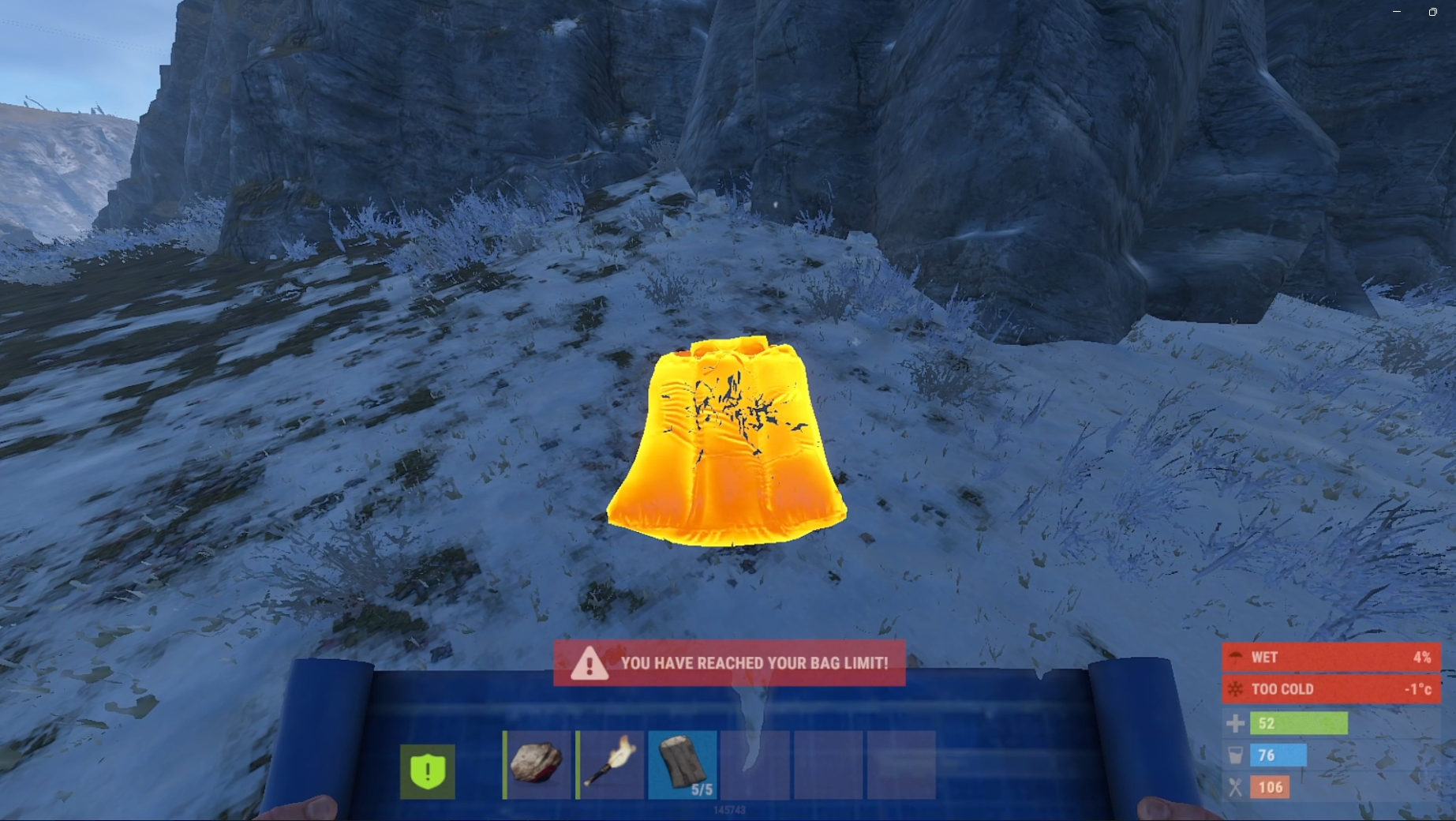
Name and position your sleeping bags strategically for better respawn management, and remember you are limited to five sleeping bags and beds in Hardcore Mode.
Manage your inventory efficiently to reduce clutter and make it easier to find essential items, especially since resources are limited.
Prioritize crafting essential items like weapons, gear, and tools, as crafting options are more restricted and scavenging becomes more important.
Be aware of your surroundings to enhance your sense of immersion and survival—atmospheric and visual upgrades make it easier to spot threats and resources.
For example, place your base near natural cover and spread out your loot to minimize losses if raided, or keep backup supplies in a hidden stash.
Use weapons effectively by maximizing the impact of each hit, especially with tools like the Jackhammer, which can deal significant damage in a single strike.
Many players worry about the increased difficulty and harsher mechanics in Hardcore Mode, but adapting your strategy can help you thrive.
Be cautious of aggressive wildlife and NPCs, as they are more frequent in Hardcore mode and can pose a serious threat.
Adapting your playstyle is key. Treat every decision as important, because in hardcore mode, it is.
Final Thoughts
Rust Hardcore Mode takes everything familiar about Rust and removes the safety net.
By limiting communication, removing UI systems, and increasing overall risk, it creates a more intense and immersive survival experience.
For players who feel like standard Rust has become too predictable, hardcore mode offers something different; a version of the game where every action matters, every encounter is uncertain, and survival truly depends on skill.
If you’re looking for a tougher, more rewarding way to play Rust, hardcore mode delivers exactly that.