
Getting water in Rust is one of the first survival problems you need to solve, especially if you spawn far away from a safe water source.
Water is scarce in Rust, and water scarcity can spell doom way too early in the game. Your character loses hydration quickly, and if your hydration level is low, you will start losing health and can even die in the process.
Remember to keep track of your hydration levels, which can be checked in the bottom-right corner of the screen, to prevent dehydration effects that can severely hinder your gameplay experience.
The good news is there are several reliable ways to collect water in Rust, including rivers, lakes, water catchers, and even tools like a water purifier. Remember, you need access to a water purifier before you can start consuming any water found in the wild.
Here are the best methods to get fresh water, store it, and turn it into a steady resource for survival.
Getting Water From Food
Some food items restore hydration along with hunger, making them useful early game. However, some foods only restore a bit of hydration, so they should not be relied on for all your water needs.
To get water from food:
Find or gather food like pumpkins from the world.
Eat the food to restore both hunger and a bit of hydration.
Use this as a temporary solution when no water source is nearby.
Notes:
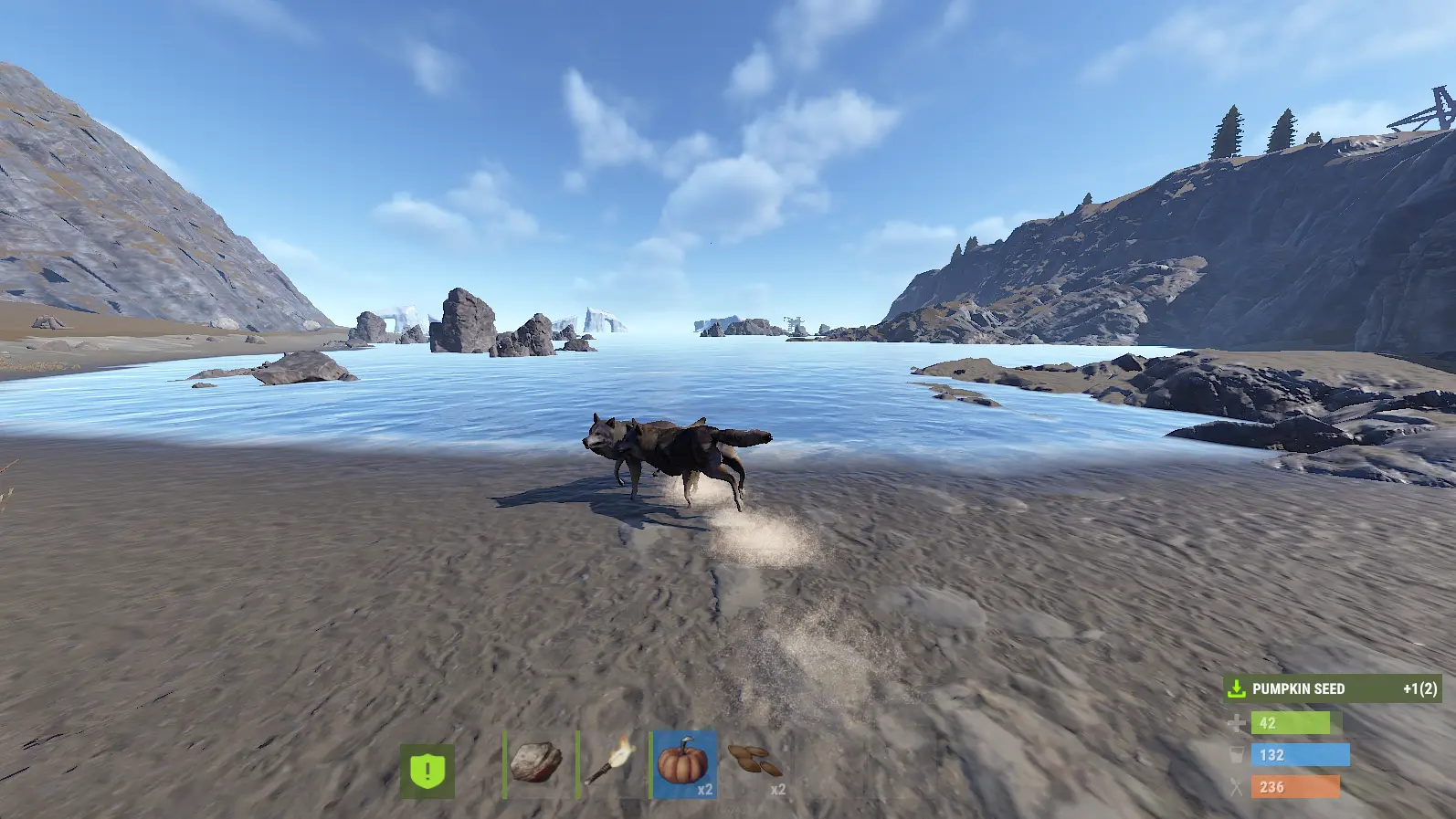
Pumpkins restore a large amount of hydration and are a strong early game option.
This is not a reliable long-term water source.
Always keep an eye on your thirst level so your character does not die while exploring.
You can also grow crops like pumpkins and corn, which contain moisture and help with hydration.
Using Water Bottles
Water bottles are one of the easiest ways to carry and store drinking water, as they can hold a certain amount of water for use on the go.
To use water bottles:
Find or craft a water bottle.
Go to a fresh water source like rivers or lakes.
Look at the water and press the interact key to fill the bottle.
Drink directly from the bottle to restore hydration.
You can find water bottles and jugs by scavenging crates and barrels while exploring the map.
Notes:
Water bottles let you carry water away from natural sources.
Avoid filling from salt water or the ocean since it is not drinkable.
Keep extra containers when traveling long distances across the map.
How Do You Fill A Water Bottle In Rust
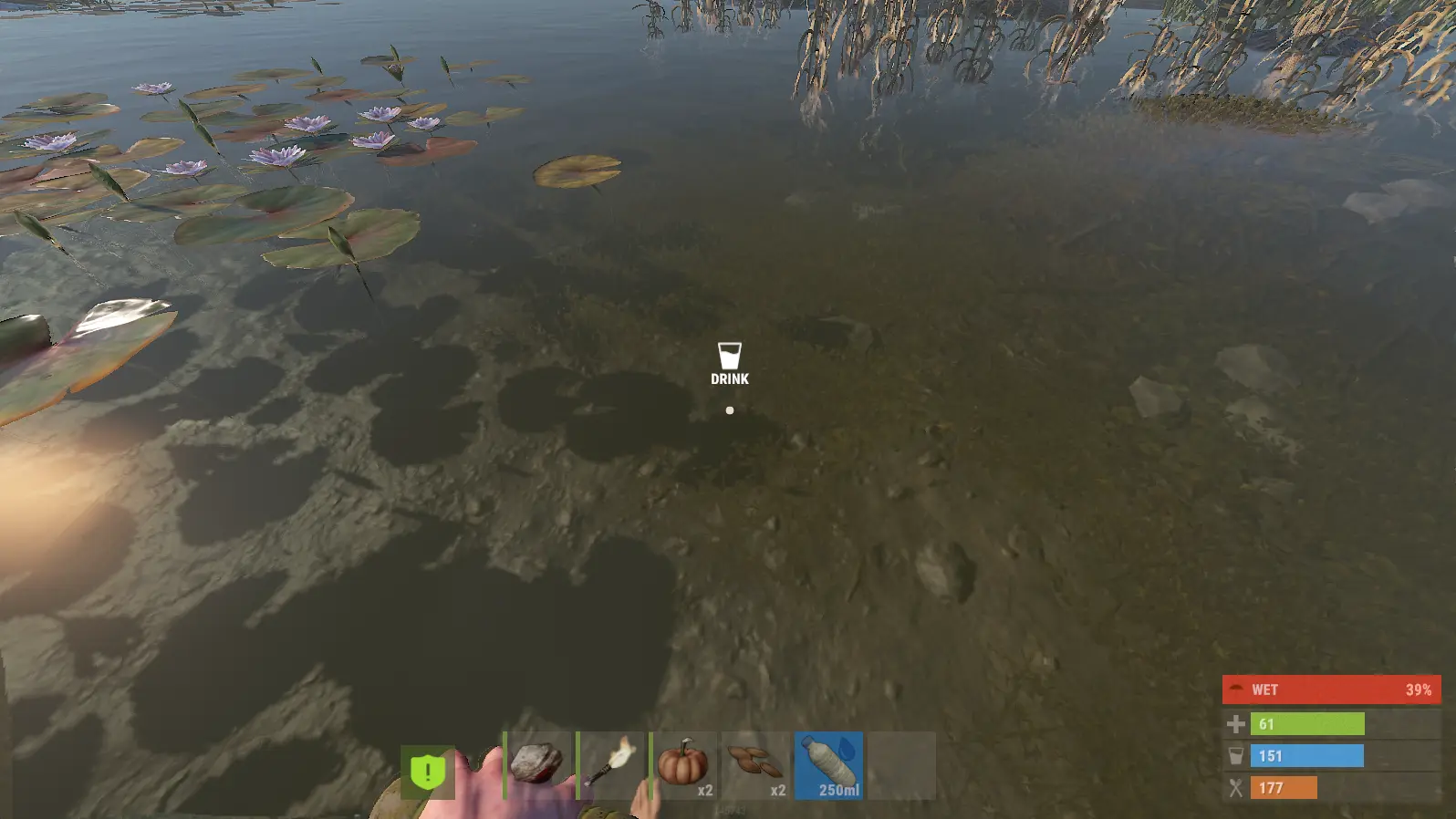
Filling containers is simple but depends on the type of water source.
To fill a water bottle:
Stand near fresh water such as rivers, lakes, or swamps.
Aim at the correct point on the water surface where you want to fill the container.
Press the interact key to fill the container.
Check the bottle to confirm it now holds drinkable water.
Notes:
Saltwater cannot be used unless purified.
Always check your surroundings for other players before filling, especially in high traffic areas.
This method works for most containers, not just bottles.
Building A Water Catcher
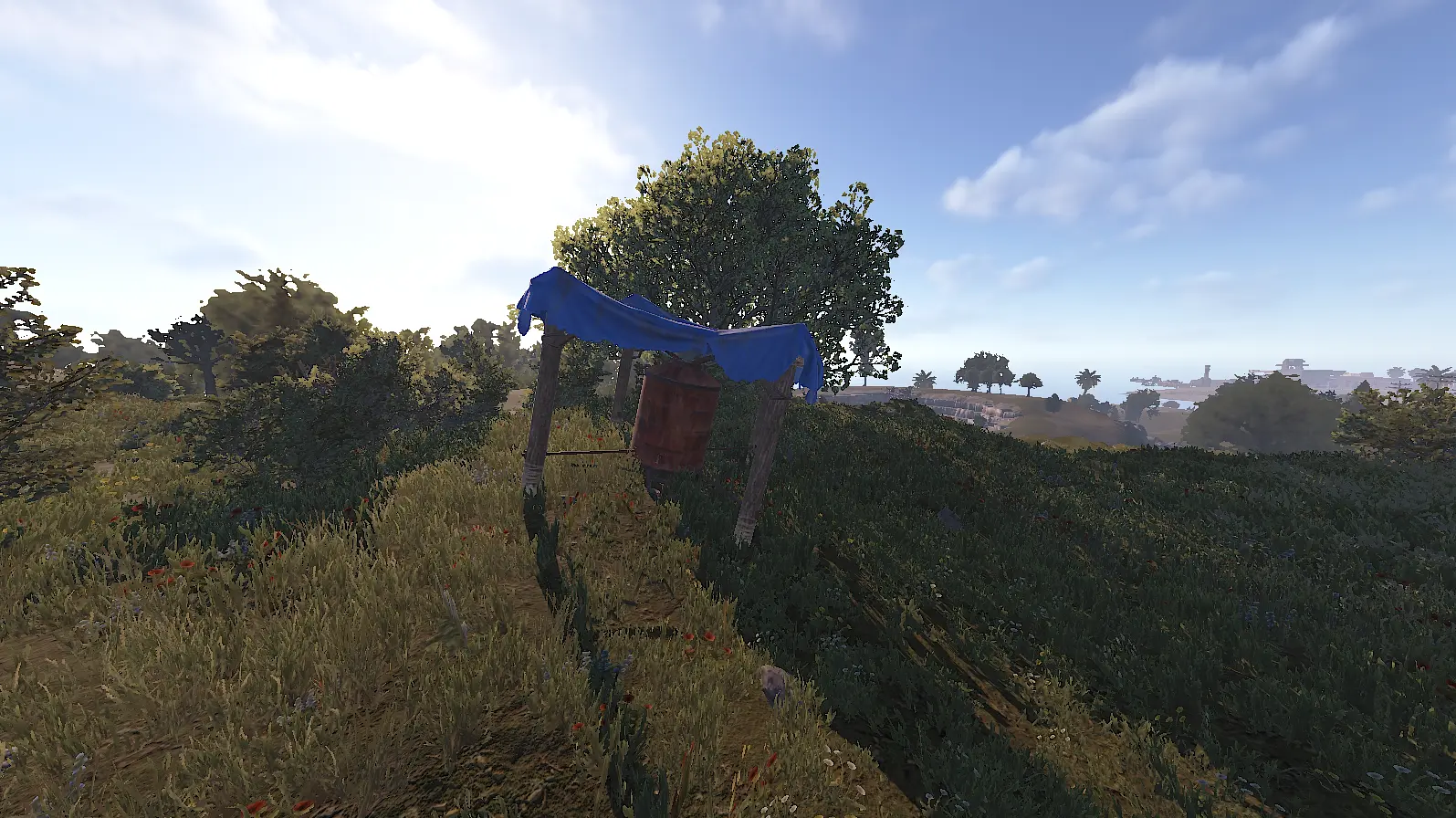
Water catchers are a reliable way to collect freshwater passively from rainfall over time.
To build water catchers:
You can build water catchers to collect rainwater.
Gather resources needed to craft a water catcher.
A small water catcher requires 100 pieces of wood, 50 pieces of metal, and one piece of tarp to craft. A large water catcher requires 500 pieces of wood, 200 pieces of metal, and two pieces of tarp.
Craft the device from your menu.
Place it outside where it can collect moisture from rainfall.
Wait for it to generate water over time.
Collect the stored water into containers.
Notes:
The Small Water Catcher is cheap and quick to craft but has a limited capacity (approximately 8ml/min). The Large Water Catcher is more efficient, with a capacity of up to 50,000 ml.
Water catchers depend on weather and rainfall.
They work best as a long-term solution for a base.
Multiple catchers increase output and create a steady water supply.
This is a game changer for survival in dry areas like the desert.
Crafting The Bota Bag
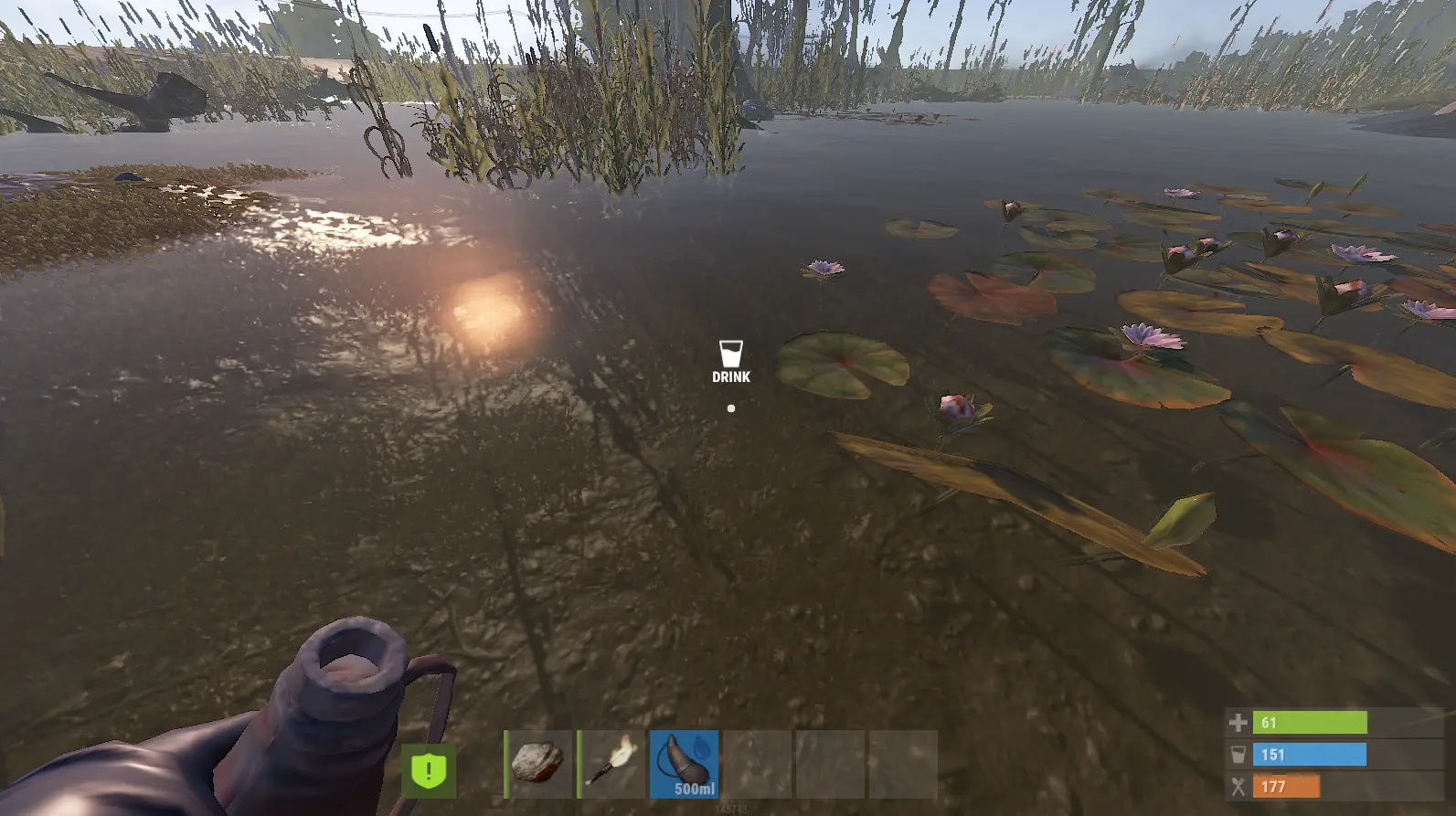
The Bota Bag is an early-game container used to carry water.
To craft a Bota Bag:
Gather 10 cloth.
Open the crafting menu.
Craft the Bota Bag.
Fill it at a fresh water source.
Use it to drink and restore hydration.
The Bota Bag can be crafted using 10 cloth and is essential for long journeys away from base.
Notes:
Can hold 500ml of water.
Holds less water than advanced containers.
Useful when you do not yet have access to better storage.
Good for early exploration and survival.
Finding A Water Jug
Water jugs provide a larger storage option for water.
To find a water jug:
Search crates and loot areas across the map.
Check high value locations like the bandit camp.
Pick up the jug and add it to your inventory.
Fill it at a fresh water source and store it at your base.
Notes:
Water jugs can hold a large amount of water, significantly more than a bottle.
Useful for base storage and long trips.
Combine with water catchers for a reliable water system.
Water Barrels can store up to 20,000ml of water and are useful for securing water inside your base.
Using A Water Purifier
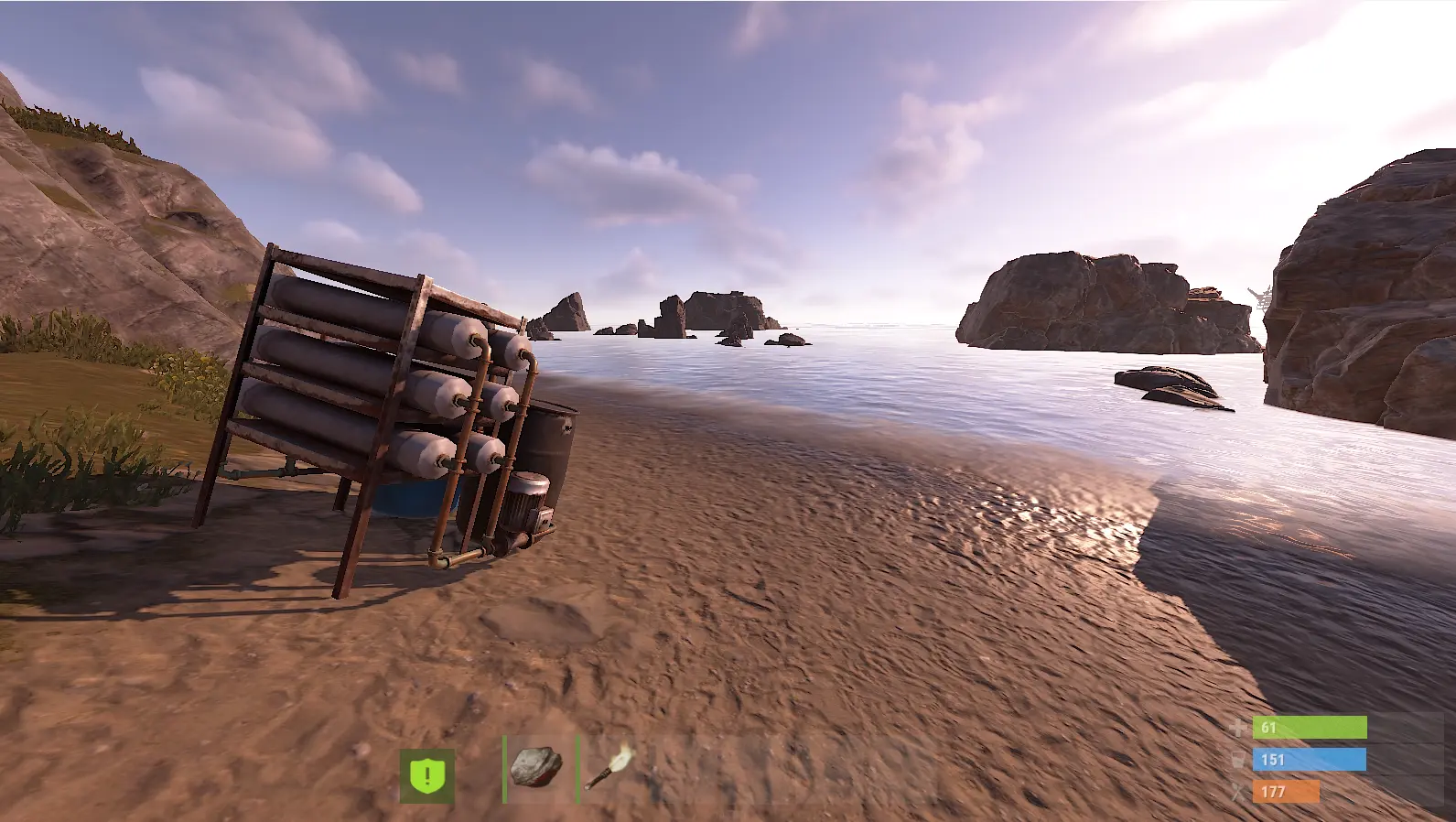
If you only have access to salt water, you can convert it into drinkable water. The Water Purifier is highly useful, relatively inexpensive to make, and can stay in your base for continuous use.
To use a water purifier:
Collect saltwater from the ocean.
Place the water into a water purifier device.
Add fuel such as wood to power it.
Turn it on to convert salt water into fresh water.
Collect the output as clean drinking water.
You can craft a water pump to convert saltwater into drinkable water, especially if you are near the coast.
Water pumps require 5 power to operate and can pump water at a rate of approximately 12ml per second.
A Powered Water Purifier requires 5 electricity to run and can be automated by connecting a Water Pump from the ocean to its "Water In" port.
Water pumps move water from the ground or ocean to your base, making it easier to continue supplying water.
You can use snow or ice to obtain water by melting it over a heat source, converting it from solid form to liquid.
Notes:
Essential if your base is near the ocean.
Requires fuel to operate.
Converts otherwise unusable water into a reliable resource.
Storing Collected Water
Having a safe and reliable way to store collected water is essential for long-term survival in Rust. Once you’ve gathered water from natural sources like rivers and lakes, or generated it using water catchers, you’ll want to keep it secure at your base for easy access whenever you need to hydrate.
Final Notes
Learning how to get water in Rust is essential for survival. Whether you collect water from natural sources like rivers and lakes, build water catchers for passive generation, or use a water purifier to process saltwater, each method helps keep your character alive.
Always carry containers, stay aware of other players, and secure a reliable water source early. Once you solve hydration, survival becomes much easier and you can focus on building, crafting, and progressing in the game.