
Players farm stone primarily by breaking stone nodes, which are large gray rocks that spawn throughout the map, especially in rocky and mountainous areas. Stone and ore nodes tend to spawn in specific areas, such as rocky terrains, beaches, and mountainous regions. Alternatively, players can purchase stone from the Outpost vending machines by trading scrap or wood for stone.
If you want enough stone for crafting stone tools, building stone walls, and upgrading your base early in the game, you need an efficient method for gathering stone quickly. Players farm stone primarily by breaking stone nodes, which are large gray rocks that spawn throughout the map, especially in rocky and mountainous areas. Stone and ore nodes tend to spawn in specific areas, such as rocky terrains, beaches, and mountainous regions. Alternatively, players can purchase stone from the Outpost vending machines by trading scrap or wood for stone.
In this comprehensive guide, you’ll learn:
How to get stone in Rust effectively during the early game
The best tools to use such as the stone pickaxe, stone hatchet, and metal pickaxe
Where to find stone nodes and areas with high stone rock spawns
How and when to use advanced methods like mining quarries, jackhammers, and low grade fuel for bulk stone farming
Since stone is a critical resource for survival and defense, mastering these strategies will give you a significant advantage as you build, upgrade, and protect your base through every wipe.

Methods to Gather Stone
Mining Stone Nodes
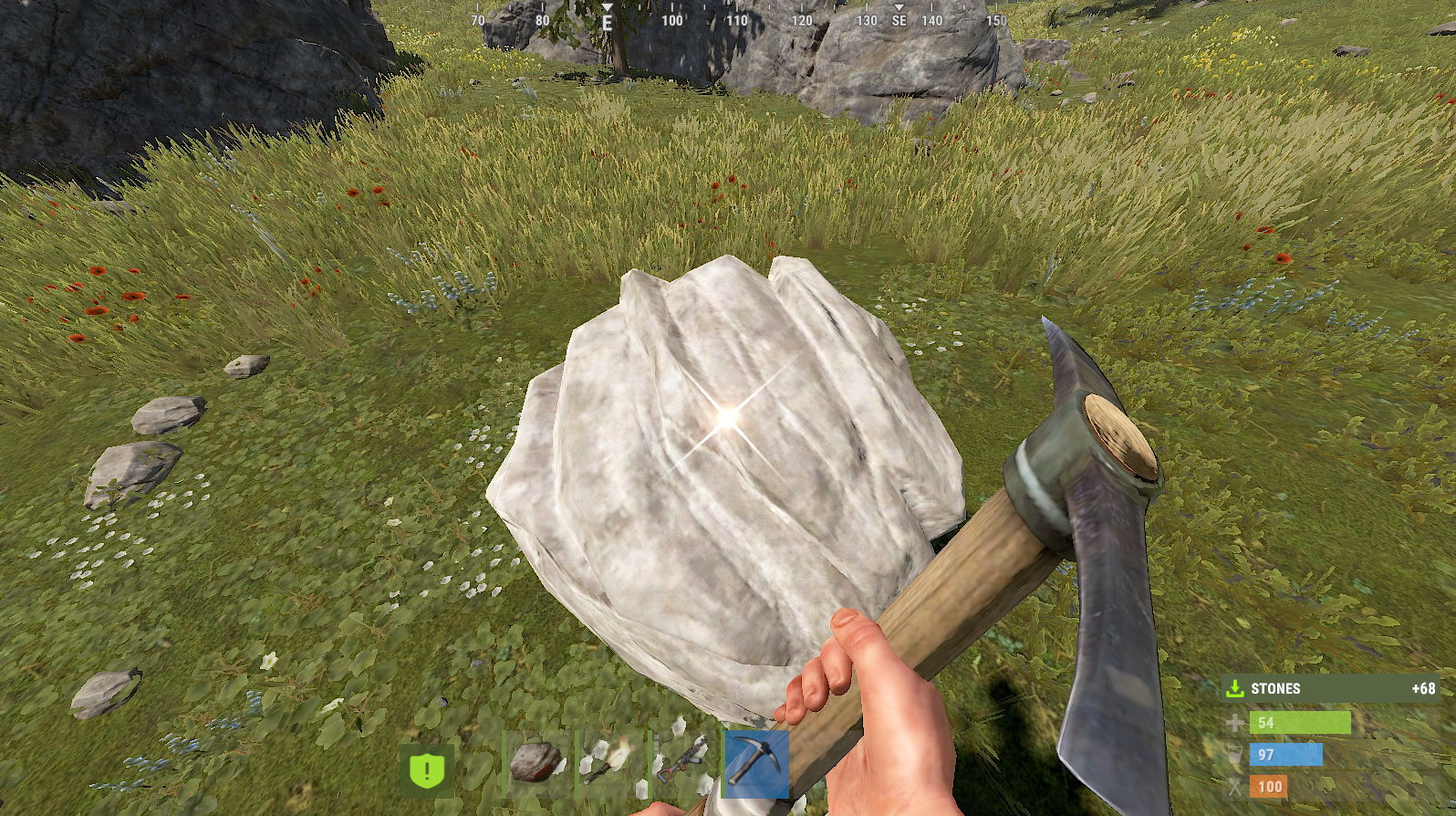
The most reliable way to gather stone is by mining stone ore nodes scattered widely across the map. These nodes are typically found in rocky and mountainous areas, in biomes that offer abundant stone resources. Using a stone pickaxe or stone hatchet, players can hit these nodes repeatedly to extract stone and sulfur ore.
In the early game, a stone pickaxe is your go-to tool for mining stone nodes. It’s easy to craft and fairly efficient for gathering the stone you need to build initial structures and craft basic tools. However, the stone pickaxe mines relatively slowly compared to better tools.
Upgrading to a metal pickaxe significantly improves your mining speed and efficiency, allowing you to gather stone much faster. This is particularly important in competitive servers where resource nodes may be contested by other players.
Collecting Loose Stones on the Beach
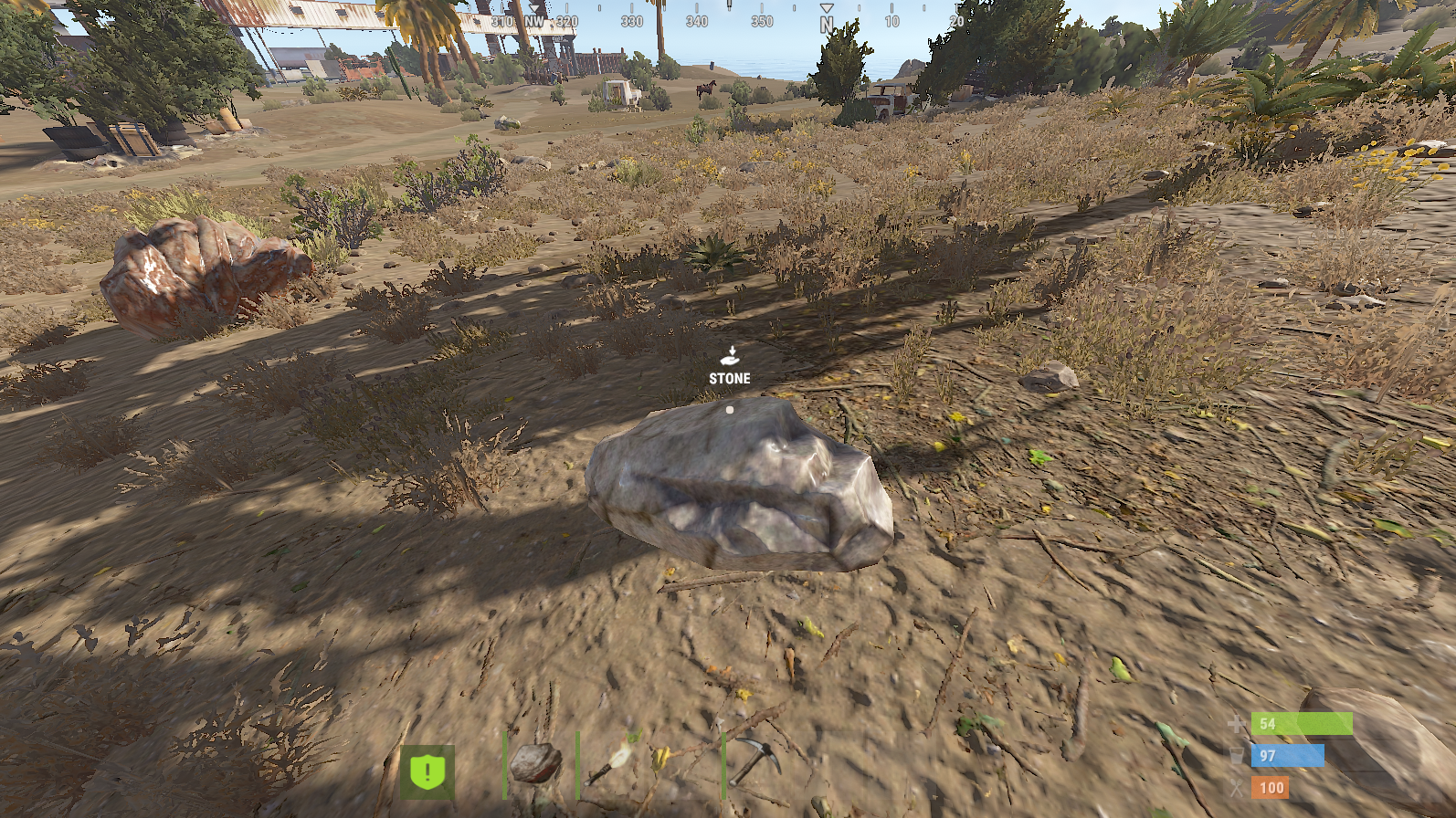
Loose stones are smaller rocks that can be found scattered on the ground near beaches and rocky shorelines. Although they provide smaller amounts of stone compared to mining nodes, collecting loose stones is a good supplementary method for early game stone gathering, especially if you don’t have mining tools yet.
Keep an eye out for these loose stones while exploring, as they can quickly add up and help you sustain your stone supply.
Recycling Stone Items
Another way to reclaim stone material is through recycling. Certain stone-based items, when recycled at outposts or recycling centers, will return some stone resources back to you. This can be handy if you have excess or unwanted stone tools or structures that you want to break down for materials.
Tools and Equipment for Stone Gathering
Having the right tools and equipment is essential for efficient stone gathering in Rust. Early in the game, players typically craft the stone pickaxe and stone hatchet to gather stone. These tools allow you to break stone ore nodes and collect loose stones scattered on the ground.
Crafting a stone spear is also recommended early on, as it provides basic defense while you mine stone in potentially hostile environments. Other players may be nearby, and being prepared to defend yourself is crucial.
As you progress, crafting or acquiring a metal pickaxe becomes vital. The metal pickaxe mines stone nodes far faster than stone tools, saving you valuable time and effort. You can find metal pickaxes through loot or craft them using metal fragments.
For players aiming to farm stone in large quantities, setting up a mining quarry is a game-changer. Mining quarries are deployable machines that automatically extract stone and other resources in a designated area. They require low grade fuel to operate, which can be found in barrels and crates scattered throughout the map.
While a mining quarry can harvest stone continuously, it requires protection. Players who leave a mining quarry unattended risk having their mined materials stolen by other players. Therefore, safeguarding your quarry with weapons, traps, and base defenses is highly recommended.
Tips for Farming More Stone
Farm at Night:
Nighttime reduces player visibility, making it easier to gather stone with less risk of being spotted or ambushed.
Use Stone Node Rotations:
Learn the spawn patterns and rotations of stone nodes to create efficient farming routes. By rotating between nodes as they respawn, you can maximize your stone gathering efficiency.
Farm with a Partner:
Teaming up to gather stone improves speed and provides safety. Partners can watch your back while you mine, deterring potential attackers.
Visit the Outpost Vending Machine:
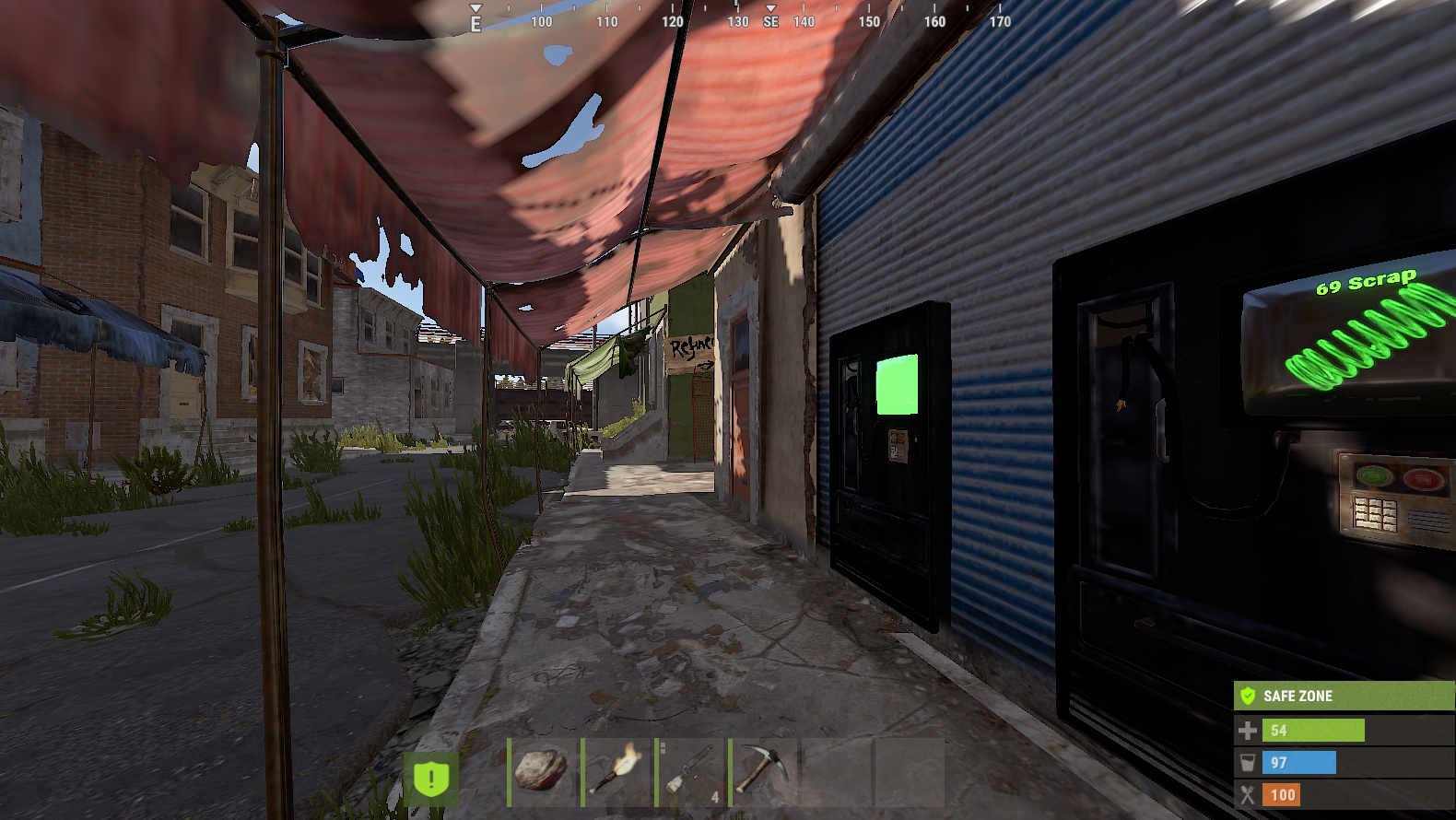
Sometimes purchasing stone or better tools from vending machines at the outpost can save time, especially if you have excess scrap or wood to trade.
Keep Your Tools Upgraded:
Always strive to upgrade from stone tools to metal pickaxes and eventually to jackhammers, which mine stone nodes much faster.
Use Furnaces Efficiently:
Smelting stone and other ores in furnaces is essential for crafting building materials and tools, so gather enough stone to fuel your furnaces continuously.
Advanced Stone Gathering: Mining Quarry and Jackhammer
Once you have progressed beyond the early game, investing in a mining quarry and a jackhammer can greatly enhance your stone farming capabilities. The mining quarry can be placed in areas with high stone node density and will automatically mine stone and other resources within its radius when fueled by low grade fuel.
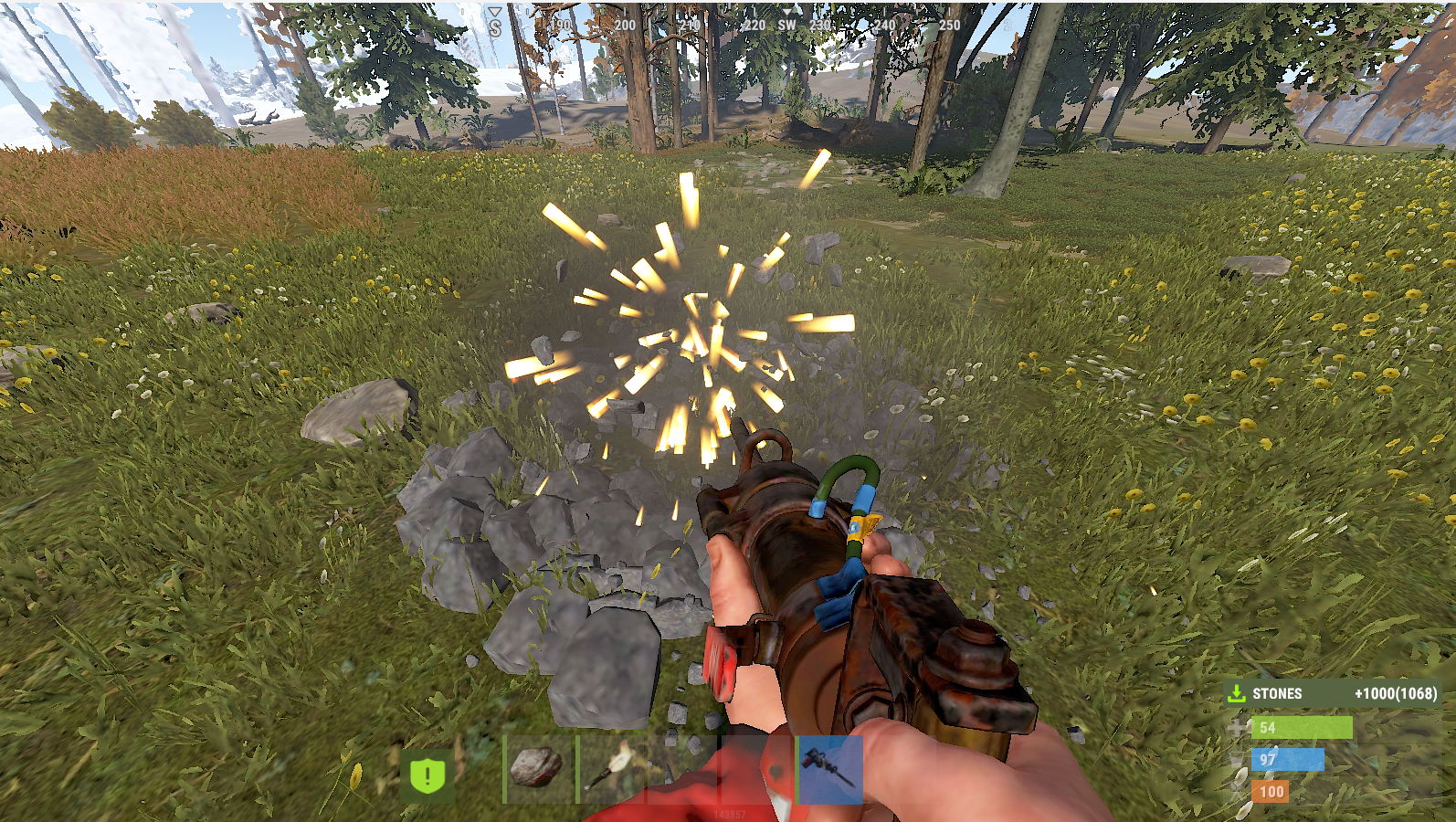
The jackhammer is a powerful tool for mining stone nodes faster than any pickaxe. It requires both metal fragments and low grade fuel to operate, but the speed increase in stone gathering often justifies the resource cost.
Both of these advanced methods require careful planning, resource investment, and defense. Quarries and jackhammers make you a high-value target, so always be prepared to defend your position and block off access routes to protect your gathered stone and equipment.
Conclusion
Stone is one of the most crucial resources in Rust, forming the backbone of your base’s durability and your ability to craft essential tools. By learning how to get stone in Rust efficiently through mining stone nodes, collecting loose stones, and recycling stone items, you set yourself up for success from the early game onward.
Using the right tools, from the stone pickaxe to the metal pickaxe and jackhammer and leveraging equipment like mining quarries fueled with low grade fuel will allow you to gather stone quickly and in large quantities. Employing strategies such as farming at night, mastering stone node rotations, and farming with partners will improve your safety and maximize your resource intake.
Remember, defending your stone resources and mining equipment from other players is just as important as gathering them. With enough stone, you can upgrade your base’s defenses with stone walls and building structures that withstand raids and wipe cycles. Whether you’re a solo player or part of a team, mastering stone gathering is a fundamental skill that will help you thrive in Rust’s challenging survival environment.